Temple festival guide
Dongzhi Ancestor Rites: Winter Solstice Offerings, Meaning, and Etiquette
冬至祭祖
Direct answer
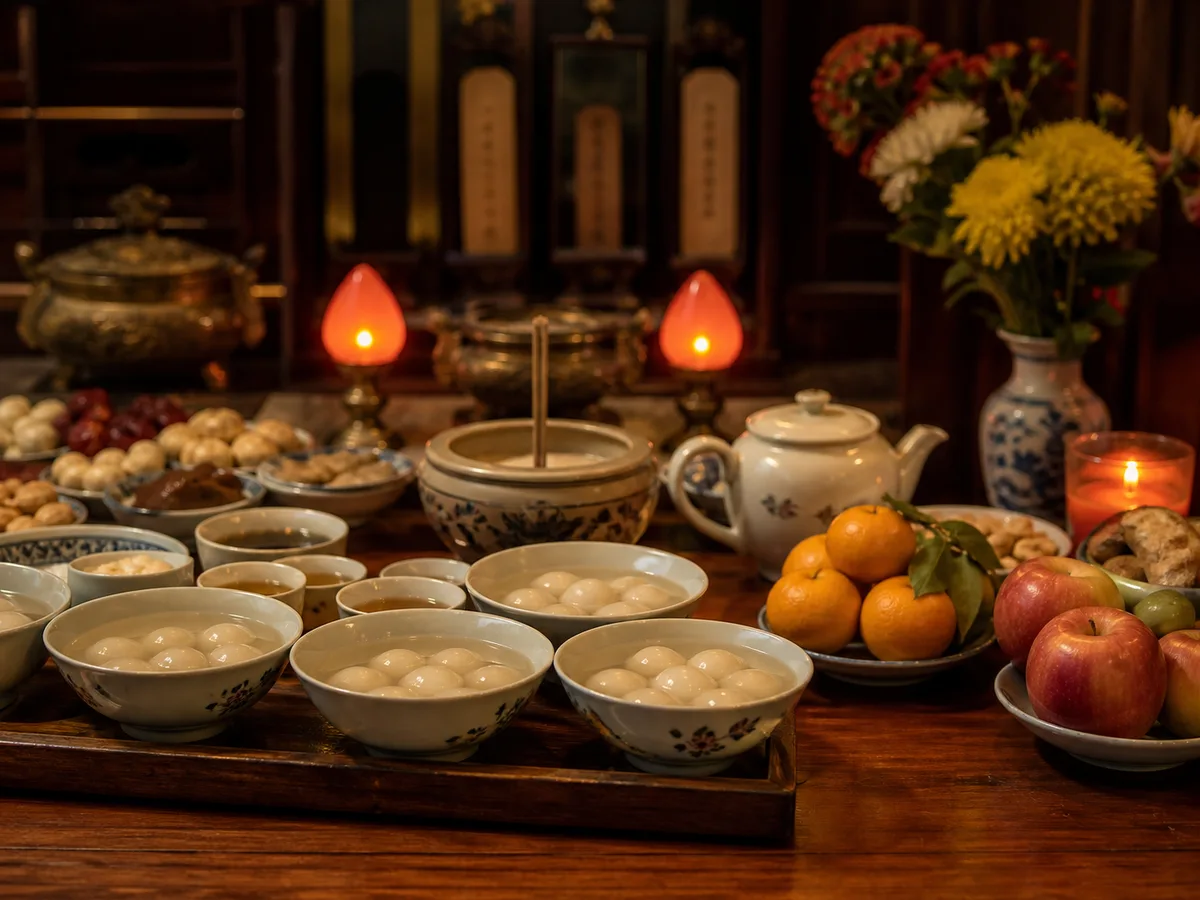
Dongzhi falls around December 21 or 22 on the solar calendar. Many Chinese families mark the winter solstice with reunion meals, tangyuan or regional foods, and ancestor offerings at home altars, ancestral halls, temples, or graves depending on custom.
Meaning and background
What it means
The day emphasizes reunion, continuity, gratitude, and the return of yang energy after the longest night.
Dongzhi marks the winter solstice and has long been associated with family reunion, calendrical renewal, and seasonal foods. Ancestor rites remain important in many southern Chinese and diaspora households.
Also known as
Winter Solstice Festival, Tangyuan ancestor prayers
Why this ceremony is distinct
Dongzhi Ancestor Rites cultural context
Dongzhi marks the winter solstice and the return of increasing yang. In many families, tangyuan, reunion, household offerings, and ancestor remembrance express continuity through the year's darkest point.
Distinctive practice
Tangyuan is more than a festive food in many homes; its roundness can signal reunion, completeness, and family continuity.
What you may see
Examples of rituals and offerings
Common rituals
- Family reunion meal
- Offering food, tea, incense, and candles to ancestors
- Eating tangyuan or regional winter solstice foods
- Visiting ancestral halls or graves in families that maintain the custom
Offerings
- Tangyuan, rice, tea, fruit, cooked dishes, incense, and candles
- Regional foods such as dumplings or savory dishes depending on family background
Processions or public rites
- Usually a household or family-lineage observance rather than a procession.
Ceremony flow
How the ceremony is usually structured
- Dongzhi Ancestor Rites usually begins with preparation of the memorial space, followed by offerings, remembrance, and careful clearing according to family or site rules.
- Timing: A solar-term observance at the winter solstice, not a fixed lunar date. Usually December 21 or 22. Use that date as a planning reference, then confirm the actual schedule with the temple, family, association, or site manager.
- The visible sequence often includes family reunion meal, offering food, tea, incense, and candles to ancestors, and eating tangyuan or regional winter solstice foods. These actions may be brief for a household rite and much longer when priests, volunteers, musicians, or community committees are involved.
- If there is no public procession, the important movement is usually around the altar, memorial space, offering table, queue, or family order rather than through the street.
Local variation
Source-backed insight
Dongzhi is solar rather than lunar, but it still sits comfortably in the ceremony directory because many families treat it as a serious ancestor and reunion day. The foods differ by region, so tangyuan should be described as common, not universal.
What to expect
- A family meal, warm sweet or savory foods, incense, and ancestor offerings.
- A quieter and more domestic atmosphere than public temple festivals.
Timing
Dates and temple calendar notes
Lunar timing: A solar-term observance at the winter solstice, not a fixed lunar date.
Gregorian notes: Usually December 21 or 22.
Exact public schedules can vary by temple, lineage, permits, and local calendar announcements.
Making a respectful plan
Planning guidance
Ask whether the family treats Dongzhi as a meal, an altar rite, or both. Timing may follow household convenience rather than a public temple schedule.
- Start by identifying the authority for this observance: a temple calendar, clan association notice, household elder, cemetery office, or event organizer. Dongzhi Ancestor Rites can look different across China, Taiwan, and Hong Kong.
- Plan for the physical setting: home altar, family altar, or temple altar. Clothing should allow comfortable standing, bowing, queuing, or walking, and footwear should match the site rather than the photograph you hope to take.
- For smaller or private rites, assume the host's instructions matter more than general festival advice. Ask before joining, photographing, or moving offerings.
- Use the existing checklist as your minimum preparation: Confirm whether the family observes at home, temple, hall, or gravesite. Also review offering rules and confirm whether the setting accepts tangyuan, rice, tea, fruit, cooked dishes, incense, and candles.
Before you go
Practical checklist
- Confirm whether the family observes at home, temple, hall, or gravesite.
- Prepare foods according to family custom rather than a generic list.
- Let elders lead the order of incense and bows.
- Keep hot soup, candles, and incense safely away from children.
Before, during, after
Preparation tips
- Before you go, save the ceremony name, Chinese name (冬至祭祖), and common aliases such as Winter Solstice Festival; this helps when reading temple notices or asking volunteers for directions.
- Prepare modest offerings only if the temple or family accepts them. Common examples for this ceremony include tangyuan, rice, tea, fruit, cooked dishes, incense, and candles and regional foods such as dumplings or savory dishes depending on family background.
- Bring practical items for cleaning, shade, water, and waste disposal when the rite involves graves, niches, or outdoor memorial spaces.
- If attending as an observer, introduce yourself politely to a volunteer or host and ask where family members, invited guests, and household participants should stand.
Respectful conduct
Etiquette and taboos
Etiquette
- Follow the family order for ancestor offerings and meals.
- Do not eat offerings before elders say they may be cleared.
- Respect families that treat Dongzhi as a major ancestor day.
Avoid
- Do not rearrange altar items without permission.
- Do not assume all families serve the same solstice foods.
Visitor tips
- If invited, ask what to bring; fruit or tea is often safer than ritual items.
- Some clan halls or temples may publish winter solstice service times.
Local practice
Common variations
- Regional variation is normal. In China, Taiwan, and Hong Kong, the same named ceremony may differ in dialect pronunciation, altar layout, vegetarian expectations, music, procession scale, and the role of priests or mediums.
- Institutional setting changes the experience: a historic temple may publish public programs, while a household, cemetery, or clan rite may remain private even when the basic offerings look familiar.
- Some communities keep this observance quiet and altar-centered, while others add chanting, communal meals, talks, or charity activities around the same date.
- Language and ritual leadership also vary. Chinese ancestor veneration, family, and seasonal practice may include Mandarin, dialect, Sanskrit, Taoist liturgy, Buddhist chanting, or plain family speech depending on who is conducting the rite.
Prayer or reflection
Sample remembrance prayer
With respect, we remember our ancestors and those who are no longer with us. May these offerings express gratitude, filial care, and peace, and may the family act with sincerity during Dongzhi Ancestor Rites.
Ancestor prayers are often personal and family-specific. Keep names, lineage details, and private dedications within the family unless invited to share them.
FAQ
Frequently asked questions
Why are tangyuan associated with Dongzhi?
Tangyuan are round glutinous rice balls associated with reunion and completeness. Many families serve them around Dongzhi alongside household or ancestor observances.
When is Dongzhi Ancestor Rites?
Dongzhi Ancestor Rites is associated with A solar-term observance at the winter solstice, not a fixed lunar date. Usually December 21 or 22. Always check the current year's temple, family, or site notice before making plans.
What does Dongzhi Ancestor Rites mean?
The day emphasizes reunion, continuity, gratitude, and the return of yang energy after the longest night. Dongzhi marks the winter solstice and has long been associated with family reunion, calendrical renewal, and seasonal foods. Ancestor rites remain important in many southern Chinese and diaspora households.
What offerings are common for Dongzhi Ancestor Rites?
Common offerings include tangyuan, rice, tea, fruit, cooked dishes, incense, and candles and regional foods such as dumplings or savory dishes depending on family background. The right offering depends on the temple, family custom, and local rules, so simple respectful participation is better than guessing.
Can visitors attend Dongzhi Ancestor Rites?
Visitors may be able to attend public portions, especially where temples, associations, or festivals publish schedules. Private household, ancestor, altar, or restricted ritual areas require invitation or permission.
What should I avoid during Dongzhi Ancestor Rites?
Do not rearrange altar items without permission. and Do not assume all families serve the same solstice foods. Also avoid blocking queues, crowd-control paths, procession teams, or families making private offerings.
Continue planning
Practical next steps
- Check the current calendar or announcement from the temple, family, cemetery, association, or organizer connected with Dongzhi Ancestor Rites.
- Review the etiquette, taboo, and visitor tip sections before you arrive so you know where to stand, what not to touch, and when to ask permission.
- Open related Bai Bai guides for ceremonies that share a deity, ancestor focus, lunar month, procession style, or household practice.
Editorial basis
Sources and update note
This guide is compiled by Bai Bai editorial team from public heritage, temple, and reference sources. It was last reviewed on May 21, 2026.