Beginner guide
Temple and Household Practice: How to Participate Respectfully
A practical guide for moving between public temple visits and private household observances without assuming every family or temple works the same way.
Direct answer
Chinese temple and household practice share themes of respect, offerings, prayer, and timing, but authority differs. Temples set public rules for their space; households follow family lineage, elders, and practical safety constraints.
Public temple practice
At a temple, read signs, follow queue flow, keep voices low near altars, and give devotees room. Public does not always mean every ritual is open for close viewing or photography.
Volunteers, temple staff, priests, or association members may guide incense order, donation counters, offerings, and festival crowd control.
Household practice
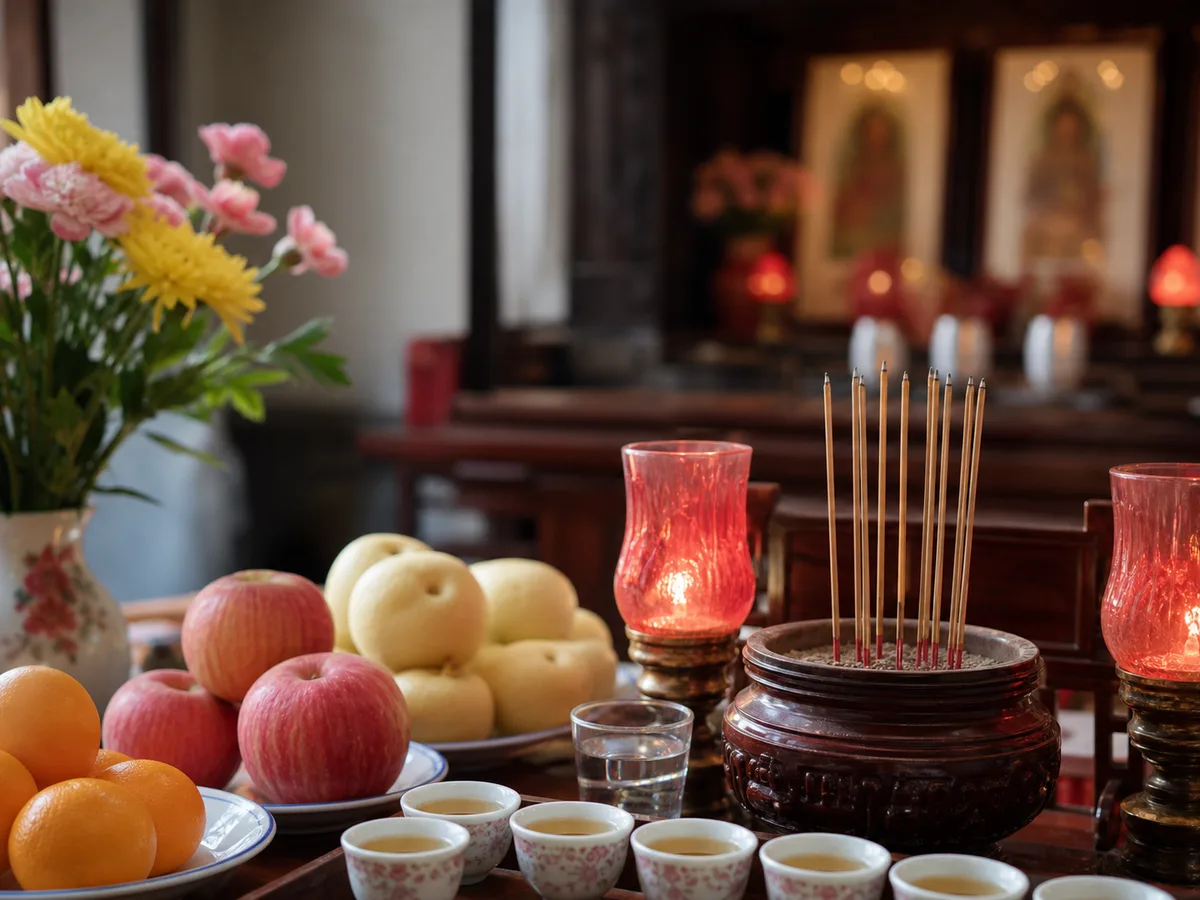
At home, families may keep deity altars, ancestor tablets, memorial photos, or simple seasonal arrangements. The household decides what is private, who leads prayers, and what language or dialect is used.
- Clean the altar area before setting offerings.
- Separate food meant for ancestors, deities, or guests if family custom requires it.
- Plan safe disposal, sharing, or clearing of offerings after prayers.
When to ask instead of assume
Ask before touching offerings, moving chairs, photographing altars, lighting incense, or joining ritual actions. If you are a guest, the most respectful role may be observation.
Caveats and respectful limits
- Private ancestor practice can include names and family history that should not be shared publicly.
- Temple mediumship, trance, or priest-led rites should be observed from the boundary set by the temple.
- Apartment, dorm, and care-home settings may require smoke-free substitutions.
Practice links
FAQ
Common beginner questions
Can visitors enter a Chinese temple?
Many temples welcome respectful visitors, but some areas or rites are restricted. Follow signs and staff guidance.
Can I photograph a home altar?
Only with permission from the household. Ancestor and deity altars can be private family spaces.
What if I make a mistake?
Pause, apologize plainly, and follow guidance from hosts or temple volunteers. Sincerity and humility matter.