Ancestors and remembrance
Prayer for Ancestors and Remembrance
Use this guide for ancestor thanks, memorial days, Qing Ming, Chong Yang, death anniversaries, or family remembrance.
Direct answer
Ancestor prayer is usually family-specific. Keep the tone respectful, separate ancestor offerings from deity offerings where your household does so, and follow cemetery, columbarium, temple, or home rules.
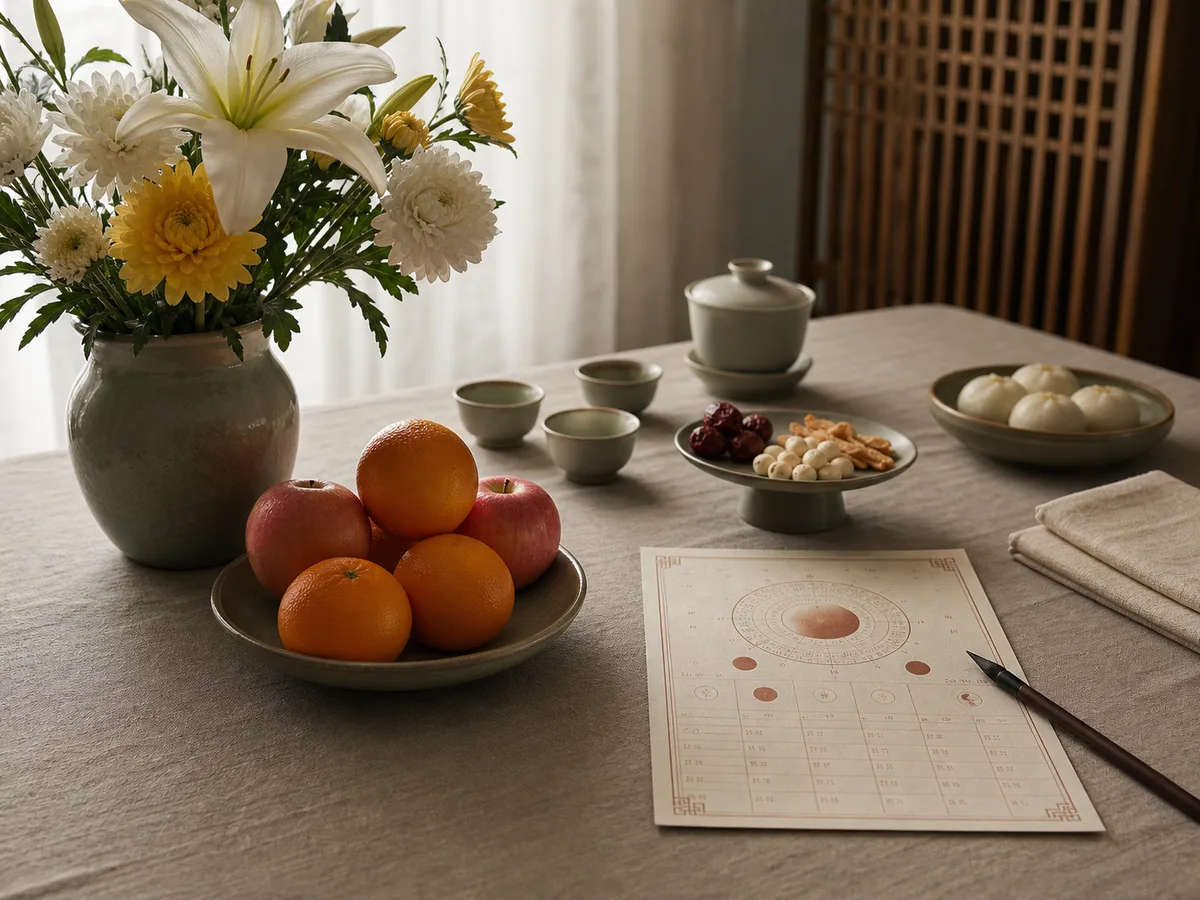
Where to begin
Deity or altar starting points
Household deities
Some households include altar order before or after ancestor remembrance.
Related ceremonyPrayer outline
Before, during, and after
Before
- Choose Ancestors or another starting point your household recognizes.
- Prepare modest items such as tea, rice or family food, fruit, and flowers are common, but family custom decides details. and separate ancestor offerings from deity offerings where your household does so..
- Keep names, documents, health information, and family details private.
During
- Address the deity or altar respectfully and introduce yourself privately.
- State one clear intention related to ancestors and remembrance.
- Ask for guidance while naming the practical action you will take yourself.
After
- Close with thanks without demanding a guaranteed result.
- Clear offerings according to temple or household practice.
- Complete any safe, reasonable promise and continue necessary professional care or planning.
Preparation
Offering notes
- Tea, rice or family food, fruit, and flowers are common, but family custom decides details.
- Separate ancestor offerings from deity offerings where your household does so.
- Protect names, photos, dates, and lineage information when sharing online.
Calendar context
Timing guidance
- Qing Ming, Chong Yang, death anniversaries, and family memorial days are common anchors.
- Cemetery, columbarium, and temple opening hours can matter more than an ideal date.
- Coordinate with elders and relatives before changing a family rite.
Respectful conduct
Etiquette
- Let the family member responsible for altar order lead if there is one.
- Clean up fully and follow site rules for food, paper, incense, and flowers.
- Avoid treating ancestor rites as a spectacle or photo opportunity.
Limits
Important caveats
Ancestor practice varies strongly by family, dialect group, religion, and site rules.
Do not publish private family names, memorial tablets, or grave details without consent.
FAQ
Frequently asked questions
Are ancestor offerings the same as deity offerings?
Not always. Many households distinguish placement, order, food, and language for ancestors and deities.
Can I honor ancestors if I do not know the exact family custom?
Yes, keep it simple and respectful, then ask elders or site staff before adding specific ritual steps.