Prayer and Offerings
Chinese Offering Checklist
Combines common Chinese offering categories with Bai Bai ceremony links and practical safety caveats.
Results are cultural and religious reference information. They are not guaranteed fortune-telling and are not professional feng shui, medical, legal, financial, safety, or immigration advice.
Use the tool
Fill in only the planning details needed for this calculation. Do not enter private medical, financial, legal, or identification data.
Methodology
How this tool works
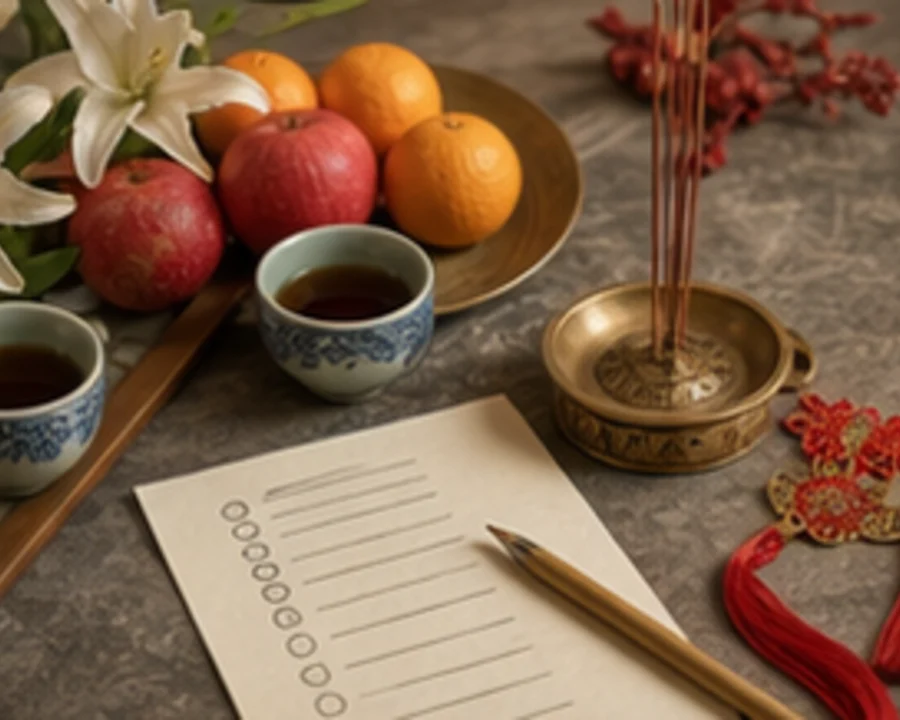
The checklist starts with common offering categories, then adapts items and cautions based on altar focus, occasion, intention, and setting.
Cultural variation notes
- Vegetarian offerings may be preferred for Guan Yin and Buddhist settings.
- Ancestors, wandering-spirit offerings, and deity offerings are not always arranged the same way.
- Never burn paper or incense where it is unsafe, illegal, or prohibited.
FAQ
Frequently asked questions
Are these offerings mandatory?
No. Offerings vary by household, temple, lineage, region, budget, and dietary practice.
Can I omit incense?
Yes, especially where smoke is restricted. Tea, flowers, fruit, quiet prayer, and temple visits may be appropriate alternatives.
Should meat be offered?
Some traditions use cooked food, while Buddhist or Guan Yin contexts often avoid meat. Follow your household or temple.