祭祖吉日
Ancestral Worship Dates 2026: Complete Chinese Almanac Dates
Direct answer
Ancestral worship dates often follow family custom more than generic almanac selection, especially Qing Ming, Chong Yang, death anniversaries, Lunar New Year, and home altar remembrance days.
Date options
2026 auspicious dates
Calendar export and sample dates
Quick plan for 2026
These dates meet the explicit activity rule. Apply the filters, then confirm family, venue, permit, professional, and local-calendar constraints.
Filter dates by month, weekend or zodiacJanuary 202616 dates
Saturday
January 3, 2026
十一月十五
Yi/Ji source details
Matched term: 祭祀. Remove (除) day; 丁丑 day.
Yi: 订盟, 纳采, 造车器, 祭祀, 祈福, 出行, 安香, 修造, 动土, 上梁, 开市, 交易, 立券, 移徙, 入宅, 会亲友, 安机械, 栽种, 纳畜, 盖屋, 起基, 安床, 造畜稠
Ji: 破土, 安葬, 行丧, 开生坟
Qualified because 祭祀 appears in Yi and no equivalent mapped purpose term appears in Ji.
Tuesday
January 6, 2026
十一月十八
Yi/Ji source details
Matched term: 祭祀. Balance (平) day; 庚辰 day.
Yi: 祭祀, 解除, 修饰垣墙, 平治道涂, 馀事勿取
Ji: 无
Qualified because 祭祀 appears in Yi and no equivalent mapped purpose term appears in Ji.
Wednesday
January 7, 2026
十一月十九
Yi/Ji source details
Matched term: 祭祀. Stable (定) day; 辛巳 day.
Yi: 嫁娶, 祭祀, 祈福, 求嗣, 动土, 会亲友, 起基, 造仓, 纳畜, 牧养, 开厕, 进人口
Ji: 掘井, 安葬, 栽种, 出行, 作灶, 开市, 入宅, 安门
Qualified because 祭祀 appears in Yi and no equivalent mapped purpose term appears in Ji.
Thursday
January 8, 2026
十一月二十
Yi/Ji source details
Matched term: 祭祀. Hold (执) day; 壬午 day.
Yi: 嫁娶, 祭祀, 祈福, 求嗣, 开光, 入宅, 移徙, 安床, 修造, 动土, 进人口
Ji: 掘井, 安葬, 栽种, 出行, 作灶, 开市, 安门
Qualified because 祭祀 appears in Yi and no equivalent mapped purpose term appears in Ji.
Sunday
January 11, 2026
十一月廿三
Yi/Ji source details
Matched term: 祭祀. Success (成) day; 乙酉 day.
Yi: 祭祀, 入殓, 破土, 除服, 成服, 启钻, 安葬, 修坟, 立碑, 馀事勿取
Ji: 无
Qualified because 祭祀 appears in Yi and no equivalent mapped purpose term appears in Ji.
Monday
January 12, 2026
十一月廿四
Yi/Ji source details
Matched term: 祭祀. Receive (收) day; 丙戌 day.
Yi: 祭祀, 解除, 馀事勿取
Ji: 诸事不宜
Qualified because 祭祀 appears in Yi and no equivalent mapped purpose term appears in Ji.
Thursday
January 15, 2026
十一月廿七
Yi/Ji source details
Matched term: 祭祀. Establish (建) day; 己丑 day.
Yi: 祭祀, 解除, 造畜稠, 教牛马, 针灸, 馀事勿取
Ji: 嫁娶, 动土, 开池, 安葬
Qualified because 祭祀 appears in Yi and no equivalent mapped purpose term appears in Ji.
Monday
January 19, 2026
十二月初一
Yi/Ji source details
Matched term: 祭祀. Stable (定) day; 癸巳 day.
Yi: 嫁娶, 祭祀, 开光, 伐木, 出火, 拆卸, 入宅, 移徙, 修造, 动土, 上梁, 安床, 纳畜
Ji: 开市, 行丧, 栽种, 出行, 出货财, 安葬, 置产, 词讼, 治病
Qualified because 祭祀 appears in Yi and no equivalent mapped purpose term appears in Ji.
Tuesday
January 20, 2026
十二月初二
Yi/Ji source details
Matched term: 祭祀. Hold (执) day; 甲午 day.
Yi: 嫁娶, 纳采, 订盟, 入宅, 移徙, 安床, 祭祀, 祈福, 开光, 出行, 解除, 出火, 拆卸, 动土, 纳畜, 谢土, 安葬, 破土
Ji: 伐木, 开市, 交易, 上梁, 作灶, 安门, 盖屋
Qualified because 祭祀 appears in Yi and no equivalent mapped purpose term appears in Ji.
Wednesday
January 21, 2026
十二月初三
Yi/Ji source details
Matched term: 祭祀. Break (破) day; 乙未 day.
Yi: 祭祀, 破屋, 坏垣, 解除, 馀事勿取
Ji: 开市, 动土, 破土
Qualified because 祭祀 appears in Yi and no equivalent mapped purpose term appears in Ji.
Friday
January 23, 2026
十二月初五
Yi/Ji source details
Matched term: 祭祀. Success (成) day; 丁酉 day.
Yi: 祭祀, 斋醮, 入殓, 破土, 启钻, 安葬, 修坟, 立碑, 除服, 成服
Ji: 嫁娶, 入宅, 作灶, 纳采, 订盟
Qualified because 祭祀 appears in Yi and no equivalent mapped purpose term appears in Ji.
Saturday
January 24, 2026
十二月初六
Yi/Ji source details
Matched term: 祭祀. Receive (收) day; 戊戌 day.
Yi: 祭祀, 斋醮, 纳财, 捕捉, 畋猎
Ji: 嫁娶, 开市, 入宅, 安床, 破土, 安葬
Qualified because 祭祀 appears in Yi and no equivalent mapped purpose term appears in Ji.
Sunday
January 25, 2026
十二月初七
Yi/Ji source details
Matched term: 祭祀. Open (开) day; 己亥 day.
Yi: 纳采, 订盟, 祭祀, 祈福, 求嗣, 斋醮, 沐浴, 进人口, 会亲友, 入学, 治病, 安碓磑, 掘井, 开池, 纳畜, 牧养, 造畜稠
Ji: 嫁娶, 合帐, 入宅, 行丧, 安葬
Qualified because 祭祀 appears in Yi and no equivalent mapped purpose term appears in Ji.
Monday
January 26, 2026
十二月初八
Yi/Ji source details
Matched term: 祭祀. Close (闭) day; 庚子 day.
Yi: 祭祀, 祈福, 求嗣, 沐浴, 问名, 交易, 纳财, 入殓, 移柩, 安葬, 修坟, 立碑, 谢土, 造畜稠, 教牛马
Ji: 入宅, 置产, 嫁娶, 动土, 栽种, 开市, 开光, 破土
Qualified because 祭祀 appears in Yi and no equivalent mapped purpose term appears in Ji.
Tuesday
January 27, 2026
十二月初九
Yi/Ji source details
Matched term: 祭祀. Establish (建) day; 辛丑 day.
Yi: 祭祀, 教牛马, 造畜稠, 会亲友, 解除, 馀事勿取
Ji: 嫁娶, 入宅, 出行, 动土, 破土, 安葬, 行丧
Qualified because 祭祀 appears in Yi and no equivalent mapped purpose term appears in Ji.
Saturday
January 31, 2026
十二月十三
Yi/Ji source details
Matched term: 祭祀. Stable (定) day; 乙巳 day.
Yi: 嫁娶, 订盟, 纳采, 会亲友, 祭祀, 安机械, 移徙, 入宅, 盖屋, 安床, 起基, 定磉, 安香, 出火, 挂匾, 拆卸, 置产
Ji: 开市, 出行, 安葬, 行丧
Qualified because 祭祀 appears in Yi and no equivalent mapped purpose term appears in Ji.
February 202620 dates
Monday
February 2, 2026
十二月十五
Yi/Ji source details
Matched term: 祭祀. Break (破) day; 丁未 day.
Yi: 祭祀, 破屋, 坏垣, 馀事勿取
Ji: 斋醮, 嫁娶, 开市
Qualified because 祭祀 appears in Yi and no equivalent mapped purpose term appears in Ji.
Wednesday
February 4, 2026
十二月十七
Yi/Ji source details
Matched term: 祭祀. Danger (危) day; 己酉 day.
Yi: 祭祀, 祈福, 求嗣, 开光, 出火, 出行, 拆卸, 修造, 动土, 入宅, 移徙, 上梁, 挂匾, 开池, 入殓, 安葬, 破土, 启钻
Ji: 嫁娶, 作灶, 安床
Qualified because 祭祀 appears in Yi and no equivalent mapped purpose term appears in Ji.
Friday
February 6, 2026
十二月十九
Yi/Ji source details
Matched term: 祭祀. Receive (收) day; 辛亥 day.
Yi: 移徙, 祭祀, 开光, 祈福, 出行, 解除, 进人口, 雇佣, 安床, 动土, 起基, 上梁, 安门
Ji: 嫁娶, 安葬, 破土, 作梁, 纳畜, 牧养, 行丧, 作灶
Qualified because 祭祀 appears in Yi and no equivalent mapped purpose term appears in Ji.
Saturday
February 7, 2026
十二月二十
Yi/Ji source details
Matched term: 祭祀. Open (开) day; 壬子 day.
Yi: 嫁娶, 开光, 祈福, 求嗣, 解除, 动土, 安床, 栽种, 开池, 掘井, 祭祀, 破土, 启钻
Ji: 入宅, 作灶, 伐木, 安葬, 出火, 出行, 纳畜
Qualified because 祭祀 appears in Yi and no equivalent mapped purpose term appears in Ji.
Sunday
February 8, 2026
十二月廿一
Yi/Ji source details
Matched term: 祭祀. Close (闭) day; 癸丑 day.
Yi: 祭祀, 合帐, 裁衣, 经络, 伐木, 作梁, 安床, 作灶, 入殓, 安葬, 启钻, 移柩
Ji: 词讼, 出火, 入宅
Qualified because 祭祀 appears in Yi and no equivalent mapped purpose term appears in Ji.
Tuesday
February 10, 2026
十二月廿三
Yi/Ji source details
Matched term: 祭祀. Remove (除) day; 乙卯 day.
Yi: 嫁娶, 祭祀, 祈福, 求嗣, 开光, 出行, 出火, 拆卸, 动土, 上梁, 进人口, 入宅, 移徙, 安床, 开市, 交易, 立券, 挂匾, 入殓, 破土, 安葬, 启钻, 除服, 成服
Ji: 无
Qualified because 祭祀 appears in Yi and no equivalent mapped purpose term appears in Ji.
Wednesday
February 11, 2026
十二月廿四
Yi/Ji source details
Matched term: 祭祀. Full (满) day; 丙辰 day.
Yi: 嫁娶, 冠笄, 纳采, 出行, 会亲友, 上梁, 安机械, 安床, 牧养, 畋猎, 祭祀, 祈福, 开光, 修造, 安门, 盖屋, 起基
Ji: 入宅, 作灶, 治病, 安葬, 移徙
Qualified because 祭祀 appears in Yi and no equivalent mapped purpose term appears in Ji.
Thursday
February 12, 2026
十二月廿五
Yi/Ji source details
Matched term: 祭祀. Balance (平) day; 丁巳 day.
Yi: 修饰垣墙, 平治道涂, 祭祀, 馀事勿取
Ji: 诸事不宜
Qualified because 祭祀 appears in Yi and no equivalent mapped purpose term appears in Ji.
Friday
February 13, 2026
十二月廿六
Yi/Ji source details
Matched term: 祭祀. Stable (定) day; 戊午 day.
Yi: 造车器, 纳采, 订盟, 祭祀, 祈福, 求嗣, 移徙, 出行, 开市, 出火, 入宅, 立券, 交易, 安门, 安床, 安葬, 谢土
Ji: 开光, 盖屋, 动土, 作灶, 栽种
Qualified because 祭祀 appears in Yi and no equivalent mapped purpose term appears in Ji.
Monday
February 16, 2026
十二月廿九
Yi/Ji source details
Matched term: 祭祀. Danger (危) day; 辛酉 day.
Yi: 祭祀, 斋醮, 沐浴, 开生坟, 除服, 成服, 移柩, 入殓, 破土, 安葬, 合寿木
Ji: 开市, 嫁娶, 安床, 会亲友, 入宅, 作灶, 上梁
Qualified because 祭祀 appears in Yi and no equivalent mapped purpose term appears in Ji.
Tuesday
February 17, 2026
正月初一
Yi/Ji source details
Matched term: 祭祀. Success (成) day; 壬戌 day.
Yi: 祭祀, 塞穴, 结网, 破土, 谢土, 安葬, 移柩, 除服, 成服, 馀事勿取
Ji: 嫁娶, 入宅
Qualified because 祭祀 appears in Yi and no equivalent mapped purpose term appears in Ji.
Wednesday
February 18, 2026
正月初二
Yi/Ji source details
Matched term: 祭祀. Receive (收) day; 癸亥 day.
Yi: 祭祀, 沐浴, 理发, 作灶, 结网, 栽种
Ji: 嫁娶, 词讼, 行丧, 安葬, 牧养, 伐木, 作梁, 开市, 纳畜, 造畜稠
Qualified because 祭祀 appears in Yi and no equivalent mapped purpose term appears in Ji.
Thursday
February 19, 2026
正月初三
Yi/Ji source details
Matched term: 祭祀. Open (开) day; 甲子 day.
Yi: 嫁娶, 祭祀, 开光, 祈福, 求嗣, 出行, 开市, 交易, 立券, 动土, 纳财, 掘井, 会亲友
Ji: 入宅, 安葬, 伐木, 作梁, 纳畜, 造畜稠, 作灶
Qualified because 祭祀 appears in Yi and no equivalent mapped purpose term appears in Ji.
Friday
February 20, 2026
正月初四
Yi/Ji source details
Matched term: 祭祀. Close (闭) day; 乙丑 day.
Yi: 祭祀, 祈福, 求嗣, 纳畜, 入殓, 启钻, 谢土, 除服, 成服
Ji: 栽种, 开光, 出行, 针灸, 嫁娶, 入宅, 动土, 破土
Qualified because 祭祀 appears in Yi and no equivalent mapped purpose term appears in Ji.
Sunday
February 22, 2026
正月初六
Yi/Ji source details
Matched term: 祭祀. Remove (除) day; 丁卯 day.
Yi: 祭祀, 祈福, 求嗣, 开光, 嫁娶, 出行, 解除, 伐木, 拆卸, 进人口, 安床, 动土, 起基, 上梁, 栽种, 纳畜, 破土, 谢土, 启钻, 安葬
Ji: 移徙, 入宅, 出火, 作灶, 掘井
Qualified because 祭祀 appears in Yi and no equivalent mapped purpose term appears in Ji.
Monday
February 23, 2026
正月初七
Yi/Ji source details
Matched term: 祭祀. Full (满) day; 戊辰 day.
Yi: 会亲友, 冠笄, 安床, 安机械, 祭祀, 祈福, 求嗣, 经络
Ji: 嫁娶, 开市, 动土, 作灶, 安葬
Qualified because 祭祀 appears in Yi and no equivalent mapped purpose term appears in Ji.
Wednesday
February 25, 2026
正月初九
Yi/Ji source details
Matched term: 祭祀. Stable (定) day; 庚午 day.
Yi: 嫁娶, 祭祀, 冠笄, 修饰垣墙, 置产
Ji: 经络, 探病, 盖屋, 作灶, 动土
Qualified because 祭祀 appears in Yi and no equivalent mapped purpose term appears in Ji.
Thursday
February 26, 2026
正月初十
Yi/Ji source details
Matched term: 祭祀. Hold (执) day; 辛未 day.
Yi: 纳采, 嫁娶, 祭祀, 祈福, 出行, 修造, 动土, 移徙, 入宅, 安葬, 破土
Ji: 开市, 斋醮
Qualified because 祭祀 appears in Yi and no equivalent mapped purpose term appears in Ji.
Friday
February 27, 2026
正月十一
Yi/Ji source details
Matched term: 祭祀. Break (破) day; 壬申 day.
Yi: 祭祀, 沐浴, 解除, 理发, 扫舍, 破屋, 坏垣, 馀事勿取
Ji: 嫁娶, 安葬
Qualified because 祭祀 appears in Yi and no equivalent mapped purpose term appears in Ji.
Saturday
February 28, 2026
正月十二
Yi/Ji source details
Matched term: 祭祀. Danger (危) day; 癸酉 day.
Yi: 纳采, 订盟, 祭祀, 祈福, 安香, 出火, 修造, 出行, 开市, 移徙, 入宅, 动土, 安葬, 破土
Ji: 安床, 作灶, 造船, 会亲友
Qualified because 祭祀 appears in Yi and no equivalent mapped purpose term appears in Ji.
March 202620 dates
Monday
March 2, 2026
正月十四
Yi/Ji source details
Matched term: 祭祀. Receive (收) day; 乙亥 day.
Yi: 纳采, 祭祀, 祈福, 出行, 会亲友, 修造, 动土, 移徙, 入宅
Ji: 嫁娶, 开市, 安葬, 破土
Qualified because 祭祀 appears in Yi and no equivalent mapped purpose term appears in Ji.
Tuesday
March 3, 2026
正月十五
Yi/Ji source details
Matched term: 祭祀. Open (开) day; 丙子 day.
Yi: 纳采, 嫁娶, 祭祀, 祈福, 出行, 开市, 会亲友, 动土, 破土, 启钻
Ji: 移徙, 入宅, 出火, 安门, 安葬
Qualified because 祭祀 appears in Yi and no equivalent mapped purpose term appears in Ji.
Wednesday
March 4, 2026
正月十六
Yi/Ji source details
Matched term: 祭祀. Close (闭) day; 丁丑 day.
Yi: 祭祀, 祈福, 求嗣, 斋醮, 入殓, 除服, 成服, 移柩, 安葬, 启钻
Ji: 嫁娶, 动土, 开光, 盖屋, 破土
Qualified because 祭祀 appears in Yi and no equivalent mapped purpose term appears in Ji.
Friday
March 6, 2026
正月十八
Yi/Ji source details
Matched term: 祭祀. Establish (建) day; 己卯 day.
Yi: 祭祀, 出行, 嫁娶, 冠笄, 安床, 入殓, 移柩, 安葬
Ji: 掘井, 动土, 作灶, 栽种
Qualified because 祭祀 appears in Yi and no equivalent mapped purpose term appears in Ji.
Sunday
March 8, 2026
正月二十
Yi/Ji source details
Matched term: 祭祀. Full (满) day; 辛巳 day.
Yi: 开光, 塑绘, 求嗣, 纳采, 裁衣, 合帐, 冠笄, 安机械, 作梁, 开柱眼, 安门, 安床, 造仓, 祭祀, 会亲友, 祈福, 经络, 纳财, 开市, 立券, 交易, 入学, 理发, 架马
Ji: 出行, 斋醮, 安葬, 嫁娶
Qualified because 祭祀 appears in Yi and no equivalent mapped purpose term appears in Ji.
Monday
March 9, 2026
正月廿一
Yi/Ji source details
Matched term: 祭祀. Balance (平) day; 壬午 day.
Yi: 祭祀, 嫁娶, 纳婿, 安葬
Ji: 栽种, 盖屋, 作灶, 入宅
Qualified because 祭祀 appears in Yi and no equivalent mapped purpose term appears in Ji.
Tuesday
March 10, 2026
正月廿二
Yi/Ji source details
Matched term: 祭祀. Stable (定) day; 癸未 day.
Yi: 祭祀, 会亲友, 订盟, 裁衣, 合帐, 安机械, 拆卸, 上梁, 安门, 入殓, 除服, 成服, 移柩, 启钻, 安葬, 立碑, 开光, 塑绘, 入学, 出行, 起基, 定磉, 放水, 移徙, 入宅, 竖柱, 立券, 经络
Ji: 伐木, 作梁
Qualified because 祭祀 appears in Yi and no equivalent mapped purpose term appears in Ji.
Wednesday
March 11, 2026
正月廿三
Yi/Ji source details
Matched term: 祭祀. Hold (执) day; 甲申 day.
Yi: 祭祀, 开光, 塑绘, 祈福, 斋醮, 裁衣, 合帐, 冠笄, 嫁娶, 拆卸, 动土, 移徙, 入宅, 入殓, 移柩, 安葬, 谢土, 求嗣, 入学, 理发, 伐木, 架马, 作梁, 出火, 修造, 起基, 定磉, 放水, 赴任
Ji: 安门
Qualified because 祭祀 appears in Yi and no equivalent mapped purpose term appears in Ji.
Thursday
March 12, 2026
正月廿四
Yi/Ji source details
Matched term: 祭祀. Break (破) day; 乙酉 day.
Yi: 祭祀, 治病, 破屋, 坏垣, 馀事勿取
Ji: 诸事不宜
Qualified because 祭祀 appears in Yi and no equivalent mapped purpose term appears in Ji.
Friday
March 13, 2026
正月廿五
Yi/Ji source details
Matched term: 祭祀. Danger (危) day; 丙戌 day.
Yi: 嫁娶, 祭祀, 出行, 冠笄, 立券, 交易, 进人口, 开市, 移徙, 修造, 动土, 安床, 入殓, 移柩, 破土
Ji: 开光, 作灶, 斋醮, 安葬
Qualified because 祭祀 appears in Yi and no equivalent mapped purpose term appears in Ji.
Saturday
March 14, 2026
正月廿六
Yi/Ji source details
Matched term: 祭祀. Success (成) day; 丁亥 day.
Yi: 开市, 立券, 交易, 挂匾, 祭祀, 祈福, 开光, 入宅, 移徙, 安床, 拆卸, 动土, 上梁, 进人口
Ji: 嫁娶, 行丧, 架马, 作梁, 理发, 牧养, 安葬, 纳畜, 伐木
Qualified because 祭祀 appears in Yi and no equivalent mapped purpose term appears in Ji.
Monday
March 16, 2026
正月廿八
Yi/Ji source details
Matched term: 祭祀. Open (开) day; 己丑 day.
Yi: 嫁娶, 祭祀, 开光, 祈福, 求嗣, 出火, 入宅, 移徙, 安床, 拆卸, 动土, 破土, 谢土
Ji: 合帐, 开市, 安葬, 入殓
Qualified because 祭祀 appears in Yi and no equivalent mapped purpose term appears in Ji.
Wednesday
March 18, 2026
正月三十
Yi/Ji source details
Matched term: 祭祀. Establish (建) day; 辛卯 day.
Yi: 祭祀, 祈福, 求嗣, 斋醮, 嫁娶, 冠笄, 出行, 开市, 交易, 会亲友, 教牛马, 除服, 成服, 启钻, 安葬, 移柩
Ji: 动土, 移徙, 入宅
Qualified because 祭祀 appears in Yi and no equivalent mapped purpose term appears in Ji.
Saturday
March 21, 2026
二月初三
Yi/Ji source details
Matched term: 祭祀. Balance (平) day; 甲午 day.
Yi: 祭祀, 祈福, 嫁娶, 冠笄, 修饰垣墙, 置产, 平治道涂
Ji: 开仓, 出货财, 盖屋, 作灶, 开市, 交易, 立券, 栽种
Qualified because 祭祀 appears in Yi and no equivalent mapped purpose term appears in Ji.
Sunday
March 22, 2026
二月初四
Yi/Ji source details
Matched term: 祭祀. Stable (定) day; 乙未 day.
Yi: 嫁娶, 祭祀, 开光, 祈福, 求嗣, 出行, 出火, 进人口, 入宅, 移徙, 安床, 拆卸, 修造, 安门, 挂匾, 纳财, 扫舍
Ji: 动土, 伐木, 安葬, 行丧
Qualified because 祭祀 appears in Yi and no equivalent mapped purpose term appears in Ji.
Monday
March 23, 2026
二月初五
Yi/Ji source details
Matched term: 祭祀. Hold (执) day; 丙申 day.
Yi: 嫁娶, 开光, 祭祀, 祈福, 求嗣, 出行, 出火, 入宅, 移徙, 解除, 栽种, 伐木, 破土, 谢土, 安葬
Ji: 开市, 交易, 作灶, 纳财, 上梁, 安床, 盖屋, 造船
Qualified because 祭祀 appears in Yi and no equivalent mapped purpose term appears in Ji.
Thursday
March 26, 2026
二月初八
Yi/Ji source details
Matched term: 祭祀. Success (成) day; 己亥 day.
Yi: 祭祀, 祈福, 求嗣, 斋醮, 沐浴, 开光, 理发, 经络, 解除, 治病, 立碑, 栽种, 牧养, 掘井, 开池
Ji: 嫁娶, 定磉, 合寿木, 安葬, 行丧
Qualified because 祭祀 appears in Yi and no equivalent mapped purpose term appears in Ji.
Saturday
March 28, 2026
二月初十
Yi/Ji source details
Matched term: 祭祀. Open (开) day; 辛丑 day.
Yi: 嫁娶, 订盟, 纳采, 祭祀, 祈福, 出行, 修造, 动土, 移徙, 入宅, 破土, 出火, 安门, 安床, 上梁, 立碑, 移柩
Ji: 开市, 交易, 合帐, 安葬
Qualified because 祭祀 appears in Yi and no equivalent mapped purpose term appears in Ji.
Monday
March 30, 2026
二月十二
Yi/Ji source details
Matched term: 祭祀. Establish (建) day; 癸卯 day.
Yi: 祭祀, 会亲友, 出行, 立券, 交易, 冠笄, 纳财
Ji: 嫁娶, 动土, 掘井, 起基, 定磉, 破土
Qualified because 祭祀 appears in Yi and no equivalent mapped purpose term appears in Ji.
Tuesday
March 31, 2026
二月十三
Yi/Ji source details
Matched term: 祭祀. Remove (除) day; 甲辰 day.
Yi: 祭祀, 沐浴, 解除, 扫舍, 塞穴, 牧养
Ji: 嫁娶, 安葬, 行丧, 安门
Qualified because 祭祀 appears in Yi and no equivalent mapped purpose term appears in Ji.
April 202621 dates
Friday
April 3, 2026
二月十六
Yi/Ji source details
Matched term: 祭祀. Stable (定) day; 丁未 day.
Yi: 嫁娶, 造车器, 纳采, 订盟, 祭祀, 祈福, 安机械, 移徙, 入宅, 开市, 立券, 破土, 安葬
Ji: 纳畜, 理发, 合寿木
Qualified because 祭祀 appears in Yi and no equivalent mapped purpose term appears in Ji.
Sunday
April 5, 2026
二月十八
Yi/Ji source details
Matched term: 祭祀. Hold (执) day; 己酉 day.
Yi: 祭祀, 祈福, 求嗣, 开光, 解除, 出火, 拆卸, 入宅, 安床, 修造, 安门, 纳畜, 启钻, 安葬
Ji: 动土, 破土, 纳财, 掘井, 挂匾, 开市, 伐木, 交易
Qualified because 祭祀 appears in Yi and no equivalent mapped purpose term appears in Ji.
Monday
April 6, 2026
二月十九
Yi/Ji source details
Matched term: 祭祀. Break (破) day; 庚戌 day.
Yi: 祭祀, 解除, 破屋, 坏垣, 馀事勿取
Ji: 诸事不宜
Qualified because 祭祀 appears in Yi and no equivalent mapped purpose term appears in Ji.
Wednesday
April 8, 2026
二月廿一
Yi/Ji source details
Matched term: 祭祀. Success (成) day; 壬子 day.
Yi: 祭祀, 祈福, 求嗣, 开光, 解除, 纳采, 冠笄, 出火, 拆卸, 进人口, 安床, 动土, 上梁, 造庙, 掘井, 开池, 入殓, 移柩, 安葬, 破土
Ji: 无
Qualified because 祭祀 appears in Yi and no equivalent mapped purpose term appears in Ji.
Saturday
April 11, 2026
二月廿四
Yi/Ji source details
Matched term: 祭祀. Close (闭) day; 乙卯 day.
Yi: 祭祀, 裁衣, 冠笄, 安床, 交易, 立券, 开池, 补垣, 塞穴, 入殓, 破土, 启钻, 安葬, 谢土, 除服, 成服
Ji: 嫁娶, 掘井, 探病, 开市, 开光, 栽种
Qualified because 祭祀 appears in Yi and no equivalent mapped purpose term appears in Ji.
Sunday
April 12, 2026
二月廿五
Yi/Ji source details
Matched term: 祭祀. Establish (建) day; 丙辰 day.
Yi: 祭祀, 出行, 教牛马, 扫舍, 馀事勿取
Ji: 开光, 伐木, 安葬, 破土
Qualified because 祭祀 appears in Yi and no equivalent mapped purpose term appears in Ji.
Monday
April 13, 2026
二月廿六
Yi/Ji source details
Matched term: 祭祀. Remove (除) day; 丁巳 day.
Yi: 祭祀, 祈福, 求嗣, 开光, 纳采, 订盟, 解除, 栽种, 纳畜, 牧养, 扫舍, 进人口
Ji: 修坟, 造桥, 作灶, 出行, 安葬, 盖屋, 入宅
Qualified because 祭祀 appears in Yi and no equivalent mapped purpose term appears in Ji.
Wednesday
April 15, 2026
二月廿八
Yi/Ji source details
Matched term: 祭祀. Balance (平) day; 己未 day.
Yi: 祭祀, 作灶, 畋猎, 结网, 修饰垣墙, 平治道涂, 馀事勿取
Ji: 嫁娶, 安床, 治病
Qualified because 祭祀 appears in Yi and no equivalent mapped purpose term appears in Ji.
Thursday
April 16, 2026
二月廿九
Yi/Ji source details
Matched term: 祭祀. Stable (定) day; 庚申 day.
Yi: 沐浴, 祭祀, 解除, 安葬, 破土, 谢土, 移柩, 馀事勿取
Ji: 斋醮, 开光, 嫁娶, 入宅, 上梁
Qualified because 祭祀 appears in Yi and no equivalent mapped purpose term appears in Ji.
Friday
April 17, 2026
三月初一
Yi/Ji source details
Matched term: 祭祀. Hold (执) day; 辛酉 day.
Yi: 祭祀, 解除, 入殓, 移柩, 启钻, 安葬, 整手足甲, 捕捉, 畋猎, 取渔, 除服, 成服, 扫舍, 谢土, 斋醮
Ji: 动土, 破土
Qualified because 祭祀 appears in Yi and no equivalent mapped purpose term appears in Ji.
Saturday
April 18, 2026
三月初二
Yi/Ji source details
Matched term: 祭祀. Break (破) day; 壬戌 day.
Yi: 祭祀, 沐浴, 解除, 破屋, 坏垣, 求医, 治病, 馀事勿取
Ji: 嫁娶, 开市
Qualified because 祭祀 appears in Yi and no equivalent mapped purpose term appears in Ji.
Monday
April 20, 2026
三月初四
Yi/Ji source details
Matched term: 祭祀. Success (成) day; 甲子 day.
Yi: 开市, 交易, 立券, 挂匾, 祭祀, 开光, 祈福, 求嗣, 安床, 解除, 修造, 安葬
Ji: 纳采, 问名, 订盟, 嫁娶, 入宅, 开仓, 出火, 动土, 破土, 纳畜, 伐木
Qualified because 祭祀 appears in Yi and no equivalent mapped purpose term appears in Ji.
Tuesday
April 21, 2026
三月初五
Yi/Ji source details
Matched term: 祭祀. Receive (收) day; 乙丑 day.
Yi: 祭祀, 修门, 取渔, 纳财, 纳畜, 馀事勿取
Ji: 嫁娶, 入宅
Qualified because 祭祀 appears in Yi and no equivalent mapped purpose term appears in Ji.
Thursday
April 23, 2026
三月初七
Yi/Ji source details
Matched term: 祭祀. Close (闭) day; 丁卯 day.
Yi: 祭祀, 出行, 修造, 动土, 合帐, 造畜稠, 安床, 移徙, 入殓, 移柩, 破土, 启钻, 安葬, 开生坟, 合寿木, 补垣, 塞穴
Ji: 入宅, 作灶, 理发, 开光, 安门
Qualified because 祭祀 appears in Yi and no equivalent mapped purpose term appears in Ji.
Friday
April 24, 2026
三月初八
Yi/Ji source details
Matched term: 祭祀. Establish (建) day; 戊辰 day.
Yi: 祭祀, 修饰垣墙, 馀事勿取
Ji: 开光, 修造, 动土, 破土
Qualified because 祭祀 appears in Yi and no equivalent mapped purpose term appears in Ji.
Saturday
April 25, 2026
三月初九
Yi/Ji source details
Matched term: 祭祀. Remove (除) day; 己巳 day.
Yi: 嫁娶, 祭祀, 祈福, 求嗣, 斋醮, 开光, 出火, 移徙, 入宅, 竖柱, 上梁, 会亲友, 盖屋, 起基, 治病, 安门, 造车器, 掘井, 开池
Ji: 纳采, 出行, 修坟, 安葬, 开市, 立券, 作灶
Qualified because 祭祀 appears in Yi and no equivalent mapped purpose term appears in Ji.
Sunday
April 26, 2026
三月初十
Yi/Ji source details
Matched term: 祭祀. Full (满) day; 庚午 day.
Yi: 祭祀, 塑绘, 开光, 纳采, 嫁娶, 开市, 出行, 会亲友, 安床, 结网, 除服, 成服, 启钻, 安葬, 移柩
Ji: 祈福, 入宅, 盖屋, 动土, 破土, 探病
Qualified because 祭祀 appears in Yi and no equivalent mapped purpose term appears in Ji.
Monday
April 27, 2026
三月十一
Yi/Ji source details
Matched term: 祭祀. Balance (平) day; 辛未 day.
Yi: 祭祀, 作灶, 平治道涂, 馀事勿取
Ji: 安床, 入宅, 安碓磑, 栽种
Qualified because 祭祀 appears in Yi and no equivalent mapped purpose term appears in Ji.
Tuesday
April 28, 2026
三月十二
Yi/Ji source details
Matched term: 祭祀. Stable (定) day; 壬申 day.
Yi: 祭祀, 祈福, 求嗣, 斋醮, 沐浴, 纳畜, 入殓, 破土, 安葬
Ji: 移徙, 入宅, 嫁娶, 出行, 安床
Qualified because 祭祀 appears in Yi and no equivalent mapped purpose term appears in Ji.
Wednesday
April 29, 2026
三月十三
Yi/Ji source details
Matched term: 祭祀. Hold (执) day; 癸酉 day.
Yi: 纳采, 祭祀, 祈福, 求嗣, 斋醮, 出行, 起基, 盖屋, 定磉, 安门, 入殓, 安葬
Ji: 嫁娶, 开市, 纳财, 出火
Qualified because 祭祀 appears in Yi and no equivalent mapped purpose term appears in Ji.
Thursday
April 30, 2026
三月十四
Yi/Ji source details
Matched term: 祭祀. Break (破) day; 甲戌 day.
Yi: 祭祀, 沐浴, 解除, 求医, 治病, 破屋, 坏垣, 馀事勿取
Ji: 祈福, 斋醮, 开市, 安葬
Qualified because 祭祀 appears in Yi and no equivalent mapped purpose term appears in Ji.
May 202619 dates
Saturday
May 2, 2026
三月十六
Yi/Ji source details
Matched term: 祭祀. Success (成) day; 丙子 day.
Yi: 祭祀, 祈福, 求嗣, 斋醮, 纳采, 订盟, 开光, 竖柱, 上梁, 开仓, 出货财, 盖屋, 起基, 定磉, 安门, 诸事不宜, 破土, 入殓, 启钻, 谢土
Ji: 出火, 嫁娶, 开市
Qualified because 祭祀 appears in Yi and no equivalent mapped purpose term appears in Ji.
Sunday
May 3, 2026
三月十七
Yi/Ji source details
Matched term: 祭祀. Receive (收) day; 丁丑 day.
Yi: 祭祀, 捕捉, 解除, 馀事勿取
Ji: 嫁娶, 安葬
Qualified because 祭祀 appears in Yi and no equivalent mapped purpose term appears in Ji.
Tuesday
May 5, 2026
三月十九
Yi/Ji source details
Matched term: 祭祀. Open (开) day; 己卯 day.
Yi: 嫁娶, 祭祀, 祈福, 求嗣, 开光, 开市, 交易, 立券, 安床, 出行, 拆卸
Ji: 纳畜, 入宅, 移徙, 安葬, 探病, 伐木, 上梁, 安门, 入殓, 动土
Qualified because 祭祀 appears in Yi and no equivalent mapped purpose term appears in Ji.
Wednesday
May 6, 2026
三月二十
Yi/Ji source details
Matched term: 祭祀. Close (闭) day; 庚辰 day.
Yi: 嫁娶, 祭祀, 祈福, 求嗣, 出行, 出火, 拆卸, 修造, 动土, 入宅, 移徙, 安床, 作灶, 塞穴, 栽种, 破土, 安葬
Ji: 开光, 掘井, 开仓
Qualified because 祭祀 appears in Yi and no equivalent mapped purpose term appears in Ji.
Monday
May 11, 2026
三月廿五
Yi/Ji source details
Matched term: 祭祀. Stable (定) day; 乙酉 day.
Yi: 嫁娶, 祭祀, 祈福, 求嗣, 开光, 出火, 出行, 拆卸, 动土, 解除, 进人口, 开市, 交易, 立券, 挂匾, 入宅, 移徙, 安床, 安门, 上梁, 安葬, 破土, 谢土
Ji: 无
Qualified because 祭祀 appears in Yi and no equivalent mapped purpose term appears in Ji.
Tuesday
May 12, 2026
三月廿六
Yi/Ji source details
Matched term: 祭祀. Hold (执) day; 丙戌 day.
Yi: 祭祀, 祈福, 求嗣, 开光, 解除, 合帐, 冠笄, 伐木, 架马, 作梁, 修造, 进人口, 嫁娶, 裁衣, 安床, 动土, 起基, 上梁, 竖柱, 放水, 会亲友
Ji: 无
Qualified because 祭祀 appears in Yi and no equivalent mapped purpose term appears in Ji.
Thursday
May 14, 2026
三月廿八
Yi/Ji source details
Matched term: 祭祀. Danger (危) day; 戊子 day.
Yi: 纳采, 订盟, 嫁娶, 造车器, 祭祀, 祈福, 求嗣, 开光, 出火, 拆卸, 修造, 动土, 进人口, 挂匾, 入宅, 移徙, 安床, 栽种, 入殓, 破土, 安葬, 除服, 成服
Ji: 开市, 立券
Qualified because 祭祀 appears in Yi and no equivalent mapped purpose term appears in Ji.
Friday
May 15, 2026
三月廿九
Yi/Ji source details
Matched term: 祭祀. Success (成) day; 己丑 day.
Yi: 开市, 交易, 立券, 祭祀, 祈福, 开光, 动土, 安床, 出行, 栽种, 纳畜, 牧养, 竖柱, 上梁, 解除, 破土
Ji: 嫁娶, 掘井, 入宅, 移徙, 安葬
Qualified because 祭祀 appears in Yi and no equivalent mapped purpose term appears in Ji.
Sunday
May 17, 2026
四月初一
Yi/Ji source details
Matched term: 祭祀. Open (开) day; 辛卯 day.
Yi: 祭祀, 祈福, 求嗣, 开光, 出行, 开市, 交易, 立券, 栽种, 安床, 纳畜, 移徙, 起基, 动土, 定磉, 造仓, 置产, 破土, 启钻, 修坟
Ji: 入宅, 修造, 安门, 伐木, 入殓, 安葬, 盖屋
Qualified because 祭祀 appears in Yi and no equivalent mapped purpose term appears in Ji.
Wednesday
May 20, 2026
四月初四
Yi/Ji source details
Matched term: 祭祀. Remove (除) day; 甲午 day.
Yi: 纳采, 订盟, 嫁娶, 祭祀, 祈福, 求嗣, 开光, 解除, 出行, 出火, 入宅, 移徙, 栽种, 纳畜, 牧养, 动土, 破土, 入殓, 安葬
Ji: 作灶, 安床, 开仓, 盖屋
Qualified because 祭祀 appears in Yi and no equivalent mapped purpose term appears in Ji.
Saturday
May 23, 2026
四月初七
Yi/Ji source details
Matched term: 祭祀. Stable (定) day; 丁酉 day.
Yi: 开市, 交易, 立券, 挂匾, 祭祀, 祈福, 斋醮, 出行, 盖屋, 起基, 修造, 动土, 定磉, 安床, 安机械, 安葬, 破土, 启钻, 除服, 成服, 立碑
Ji: 作灶, 嫁娶, 移徙, 入宅, 理发
Qualified because 祭祀 appears in Yi and no equivalent mapped purpose term appears in Ji.
Sunday
May 24, 2026
四月初八
Yi/Ji source details
Matched term: 祭祀. Hold (执) day; 戊戌 day.
Yi: 嫁娶, 纳采, 订盟, 祭祀, 祈福, 求嗣, 开光, 出火, 出行, 拆卸, 动土, 修造, 进人口, 入宅, 移徙, 安床, 解除, 挂匾, 栽种, 破土, 谢土, 入殓, 移柩, 安葬
Ji: 开市, 立券, 造船, 合寿木
Qualified because 祭祀 appears in Yi and no equivalent mapped purpose term appears in Ji.
Monday
May 25, 2026
四月初九
Yi/Ji source details
Matched term: 祭祀. Break (破) day; 己亥 day.
Yi: 祭祀, 沐浴, 解除, 破屋, 坏垣, 馀事勿取
Ji: 开光, 安葬
Qualified because 祭祀 appears in Yi and no equivalent mapped purpose term appears in Ji.
Tuesday
May 26, 2026
四月初十
Yi/Ji source details
Matched term: 祭祀. Danger (危) day; 庚子 day.
Yi: 订盟, 纳采, 嫁娶, 解除, 祭祀, 祈福, 求嗣, 开光, 出行, 出火, 拆卸, 入宅, 移徙, 安床, 栽种, 纳畜, 动土, 破土, 谢土, 安葬, 修坟
Ji: 作灶, 开市, 经络
Qualified because 祭祀 appears in Yi and no equivalent mapped purpose term appears in Ji.
Wednesday
May 27, 2026
四月十一
Yi/Ji source details
Matched term: 祭祀. Success (成) day; 辛丑 day.
Yi: 祭祀, 祈福, 求嗣, 开光, 订盟, 纳采, 解除, 动土, 起基, 进人口, 开市, 交易, 立券, 纳财, 造仓, 开池, 栽种, 纳畜, 破土, 安葬
Ji: 安床, 上梁, 裁衣, 入宅, 嫁娶
Qualified because 祭祀 appears in Yi and no equivalent mapped purpose term appears in Ji.
Thursday
May 28, 2026
四月十二
Yi/Ji source details
Matched term: 祭祀. Receive (收) day; 壬寅 day.
Yi: 祭祀, 结网, 捕捉, 馀事勿取
Ji: 探病, 嫁娶, 开市
Qualified because 祭祀 appears in Yi and no equivalent mapped purpose term appears in Ji.
Friday
May 29, 2026
四月十三
Yi/Ji source details
Matched term: 祭祀. Open (开) day; 癸卯 day.
Yi: 祭祀, 祈福, 求嗣, 开光, 纳采, 订盟, 嫁娶, 出行, 动土, 破土, 会亲友, 开市, 交易, 立券, 习艺, 拆卸, 起基, 安碓磑, 放水, 开池, 造仓, 开渠, 栽种, 谢土, 启钻, 修坟, 立碑
Ji: 入宅, 安门, 安葬
Qualified because 祭祀 appears in Yi and no equivalent mapped purpose term appears in Ji.
Saturday
May 30, 2026
四月十四
Yi/Ji source details
Matched term: 祭祀. Close (闭) day; 甲辰 day.
Yi: 嫁娶, 冠笄, 祭祀, 出行, 移徙, 入宅, 作灶, 造车器, 补垣, 塞穴, 开厕, 破土, 启钻, 除服, 成服, 入殓
Ji: 盖屋, 造桥, 安门, 安葬, 上梁
Qualified because 祭祀 appears in Yi and no equivalent mapped purpose term appears in Ji.
Sunday
May 31, 2026
四月十五
Yi/Ji source details
Matched term: 祭祀. Establish (建) day; 乙巳 day.
Yi: 祭祀, 解除, 断蚁, 会亲友, 馀事勿取
Ji: 嫁娶, 安葬
Qualified because 祭祀 appears in Yi and no equivalent mapped purpose term appears in Ji.
June 202623 dates
Monday
June 1, 2026
四月十六
Yi/Ji source details
Matched term: 祭祀. Remove (除) day; 丙午 day.
Yi: 嫁娶, 纳采, 订盟, 祭祀, 祈福, 治病, 造车器, 修造, 动土, 移徙, 入宅
Ji: 开市, 出行, 安床, 作灶, 安葬
Qualified because 祭祀 appears in Yi and no equivalent mapped purpose term appears in Ji.
Tuesday
June 2, 2026
四月十七
Yi/Ji source details
Matched term: 祭祀. Full (满) day; 丁未 day.
Yi: 嫁娶, 纳采, 订盟, 会亲友, 安机械, 结网, 冠笄, 祭祀, 求嗣, 进人口, 经络
Ji: 开市, 作灶, 动土, 行丧, 安葬
Qualified because 祭祀 appears in Yi and no equivalent mapped purpose term appears in Ji.
Wednesday
June 3, 2026
四月十八
Yi/Ji source details
Matched term: 祭祀. Balance (平) day; 戊申 day.
Yi: 祭祀, 沐浴, 移徙, 破土, 安葬, 扫舍, 平治道涂
Ji: 祈福, 嫁娶, 入宅, 安床, 作灶
Qualified because 祭祀 appears in Yi and no equivalent mapped purpose term appears in Ji.
Thursday
June 4, 2026
四月十九
Yi/Ji source details
Matched term: 祭祀. Stable (定) day; 己酉 day.
Yi: 祭祀, 祈福, 斋醮, 求嗣, 安机械, 纳畜, 移徙, 入宅, 塑绘, 开光, 起基, 竖柱, 上梁, 作灶, 安门, 安香, 出火, 盖屋, 启钻, 安葬
Ji: 动土, 破土, 嫁娶
Qualified because 祭祀 appears in Yi and no equivalent mapped purpose term appears in Ji.
Friday
June 5, 2026
四月二十
Yi/Ji source details
Matched term: 祭祀. Stable (定) day; 庚戌 day.
Yi: 嫁娶, 祭祀, 开光, 祈福, 求嗣, 出行, 出火, 拆卸, 动土, 修造, 进人口, 入宅, 移徙, 安床, 挂匾, 交易, 立券, 栽种, 纳畜, 入殓, 破土, 启钻, 安葬
Ji: 无
Qualified because 祭祀 appears in Yi and no equivalent mapped purpose term appears in Ji.
Saturday
June 6, 2026
四月廿一
Yi/Ji source details
Matched term: 祭祀. Hold (执) day; 辛亥 day.
Yi: 祭祀, 祈福, 求嗣, 开光, 出行, 伐木, 出火, 拆卸, 修造, 动土, 起基, 安床, 入宅, 移徙
Ji: 嫁娶, 开市, 交易, 行丧, 安葬, 修坟
Qualified because 祭祀 appears in Yi and no equivalent mapped purpose term appears in Ji.
Monday
June 8, 2026
四月廿三
Yi/Ji source details
Matched term: 祭祀. Danger (危) day; 癸丑 day.
Yi: 开市, 交易, 立券, 纳财, 开池, 开厕, 结网, 祭祀, 修造, 动土, 安床, 放水, 经络, 破土
Ji: 嫁娶, 造桥, 词讼, 移徙, 安门, 作灶, 栽种
Qualified because 祭祀 appears in Yi and no equivalent mapped purpose term appears in Ji.
Wednesday
June 10, 2026
四月廿五
Yi/Ji source details
Matched term: 祭祀. Receive (收) day; 乙卯 day.
Yi: 祭祀, 作灶, 馀事勿取
Ji: 诸事不宜
Qualified because 祭祀 appears in Yi and no equivalent mapped purpose term appears in Ji.
Saturday
June 13, 2026
四月廿八
Yi/Ji source details
Matched term: 祭祀. Establish (建) day; 戊午 day.
Yi: 祭祀, 教牛马, 断蚁, 馀事勿取
Ji: 斋醮, 移徙, 入宅, 动土
Qualified because 祭祀 appears in Yi and no equivalent mapped purpose term appears in Ji.
Sunday
June 14, 2026
四月廿九
Yi/Ji source details
Matched term: 祭祀. Remove (除) day; 己未 day.
Yi: 纳采, 订盟, 嫁娶, 祭祀, 祈福, 开市, 纳财, 立券, 移徙, 出行, 修造, 动土, 起基, 定磉, 竖柱, 拆卸, 扫舍, 放水, 安香, 安床, 造船, 开池, 掘井, 造畜稠, 栽种
Ji: 行丧, 安葬, 破土, 作灶, 伐木, 斋醮
Qualified because 祭祀 appears in Yi and no equivalent mapped purpose term appears in Ji.
Monday
June 15, 2026
五月初一
Yi/Ji source details
Matched term: 祭祀. Full (满) day; 庚申 day.
Yi: 嫁娶, 开光, 祭祀, 祈福, 出行, 解除, 移徙, 入宅, 开市, 纳财, 起基, 修造, 竖柱, 上梁, 盖屋, 作灶, 出火, 安香, 补垣, 塞穴, 拆卸, 放水, 扫舍, 造仓, 造船, 栽种, 安葬
Ji: 纳采, 订盟, 安床, 谢土, 破土, 动土
Qualified because 祭祀 appears in Yi and no equivalent mapped purpose term appears in Ji.
Tuesday
June 16, 2026
五月初二
Yi/Ji source details
Matched term: 祭祀. Balance (平) day; 辛酉 day.
Yi: 嫁娶, 祭祀, 理发, 作灶, 修饰垣墙, 平治道涂, 整手足甲, 沐浴, 冠笄
Ji: 破土, 出行, 栽种
Qualified because 祭祀 appears in Yi and no equivalent mapped purpose term appears in Ji.
Wednesday
June 17, 2026
五月初三
Yi/Ji source details
Matched term: 祭祀. Stable (定) day; 壬戌 day.
Yi: 嫁娶, 纳采, 订盟, 祭祀, 祈福, 求嗣, 开光, 出火, 出行, 拆卸, 修造, 动土, 进人口, 入宅, 移徙, 安床, 交易, 立券, 挂匾, 纳财, 入殓, 安葬, 启钻, 除服, 成服
Ji: 掘井, 破土
Qualified because 祭祀 appears in Yi and no equivalent mapped purpose term appears in Ji.
Thursday
June 18, 2026
五月初四
Yi/Ji source details
Matched term: 祭祀. Hold (执) day; 癸亥 day.
Yi: 畋猎, 捕捉, 结网, 取渔, 祭祀, 沐浴, 馀事勿取
Ji: 嫁娶, 开市, 安葬, 启钻, 行丧
Qualified because 祭祀 appears in Yi and no equivalent mapped purpose term appears in Ji.
Friday
June 19, 2026
五月初五
Yi/Ji source details
Matched term: 祭祀. Break (破) day; 甲子 day.
Yi: 祭祀, 破屋, 坏垣, 馀事勿取
Ji: 移徙, 入宅, 开仓, 出货财
Qualified because 祭祀 appears in Yi and no equivalent mapped purpose term appears in Ji.
Saturday
June 20, 2026
五月初六
Yi/Ji source details
Matched term: 祭祀. Danger (危) day; 乙丑 day.
Yi: 祭祀, 斋醮, 塑绘, 开光, 出行, 修造, 动土, 造畜稠, 安床, 放水, 掘井, 开池, 开厕, 结网, 破土
Ji: 出火, 入宅
Qualified because 祭祀 appears in Yi and no equivalent mapped purpose term appears in Ji.
Monday
June 22, 2026
五月初八
Yi/Ji source details
Matched term: 祭祀. Receive (收) day; 丁卯 day.
Yi: 祭祀, 结网, 馀事勿取
Ji: 入宅, 出行, 掘井, 安葬
Qualified because 祭祀 appears in Yi and no equivalent mapped purpose term appears in Ji.
Tuesday
June 23, 2026
五月初九
Yi/Ji source details
Matched term: 祭祀. Open (开) day; 戊辰 day.
Yi: 嫁娶, 纳采, 订盟, 冠笄, 造车器, 祭祀, 开光, 祈福, 求嗣, 出行, 解除, 伐木, 出火, 入宅, 拆卸, 修造, 动土, 上梁, 安床, 栽种, 破土
Ji: 行丧, 置产, 安葬
Qualified because 祭祀 appears in Yi and no equivalent mapped purpose term appears in Ji.
Friday
June 26, 2026
五月十二
Yi/Ji source details
Matched term: 祭祀. Remove (除) day; 辛未 day.
Yi: 嫁娶, 祭祀, 祈福, 求嗣, 开光, 出行, 解除, 出火, 拆卸, 修造, 进人口, 入宅, 移徙, 动土, 安床, 纳畜, 栽种, 纳财, 交易, 立券, 挂匾, 造畜稠
Ji: 安葬, 开生坟, 行丧
Qualified because 祭祀 appears in Yi and no equivalent mapped purpose term appears in Ji.
Saturday
June 27, 2026
五月十三
Yi/Ji source details
Matched term: 祭祀. Full (满) day; 壬申 day.
Yi: 安机械, 祭祀, 祈福, 求嗣, 沐浴, 解除, 纳采, 开市, 修造, 竖柱, 上梁, 开柱眼, 安碓磑, 归岫, 补垣, 塞穴, 拆卸, 放水, 出火, 扫舍, 开生坟, 合寿木, 安葬, 谢土, 启钻, 除服, 成服
Ji: 嫁娶, 安床, 作灶, 动土, 破土, 造船
Qualified because 祭祀 appears in Yi and no equivalent mapped purpose term appears in Ji.
Sunday
June 28, 2026
五月十四
Yi/Ji source details
Matched term: 祭祀. Balance (平) day; 癸酉 day.
Yi: 祭祀, 沐浴, 理发, 整手足甲, 修饰垣墙, 平治道涂, 馀事勿取
Ji: 开市, 入宅, 出行, 修造, 词讼
Qualified because 祭祀 appears in Yi and no equivalent mapped purpose term appears in Ji.
Monday
June 29, 2026
五月十五
Yi/Ji source details
Matched term: 祭祀. Stable (定) day; 甲戌 day.
Yi: 嫁娶, 纳采, 祭祀, 祈福, 出行, 立券, 移徙, 入宅, 动土, 破土, 安葬
Ji: 开光, 作灶, 盖屋, 架马, 开仓
Qualified because 祭祀 appears in Yi and no equivalent mapped purpose term appears in Ji.
Tuesday
June 30, 2026
五月十六
Yi/Ji source details
Matched term: 祭祀. Hold (执) day; 乙亥 day.
Yi: 纳采, 订盟, 冠笄, 祭祀, 祈福, 斋醮, 出行, 修造, 动土, 移徙, 入宅, 安香, 出火, 拆卸, 盖屋, 起基, 竖柱, 上梁, 定磉, 安门, 开池
Ji: 嫁娶, 开市, 合寿木, 安葬
Qualified because 祭祀 appears in Yi and no equivalent mapped purpose term appears in Ji.
July 202623 dates
Wednesday
July 1, 2026
五月十七
Yi/Ji source details
Matched term: 祭祀. Break (破) day; 丙子 day.
Yi: 祭祀, 沐浴, 破屋, 坏垣, 馀事勿取
Ji: 入宅, 嫁娶, 移徙
Qualified because 祭祀 appears in Yi and no equivalent mapped purpose term appears in Ji.
Thursday
July 2, 2026
五月十八
Yi/Ji source details
Matched term: 祭祀. Danger (危) day; 丁丑 day.
Yi: 嫁娶, 安机械, 交易, 出行, 祭祀, 祈福, 求嗣, 斋醮, 塑绘, 开光, 合帐, 裁衣, 放水, 开池, 掘井
Ji: 作灶, 理发, 造桥, 行丧, 安葬
Qualified because 祭祀 appears in Yi and no equivalent mapped purpose term appears in Ji.
Saturday
July 4, 2026
五月二十
Yi/Ji source details
Matched term: 祭祀. Receive (收) day; 己卯 day.
Yi: 祭祀, 作灶, 馀事勿取
Ji: 开市, 安葬, 破土, 修坟, 掘井
Qualified because 祭祀 appears in Yi and no equivalent mapped purpose term appears in Ji.
Sunday
July 5, 2026
五月廿一
Yi/Ji source details
Matched term: 祭祀. Open (开) day; 庚辰 day.
Yi: 祭祀, 祈福, 求嗣, 斋醮, 安香, 解除, 移徙, 入宅, 会亲友, 求医, 治病, 动土, 破土, 开生坟, 合寿木
Ji: 合帐, 上梁, 经络, 安葬, 入殓
Qualified because 祭祀 appears in Yi and no equivalent mapped purpose term appears in Ji.
Tuesday
July 7, 2026
五月廿三
Yi/Ji source details
Matched term: 祭祀. Close (闭) day; 壬午 day.
Yi: 祭祀, 入殓, 破土, 除服, 成服, 移柩, 启钻, 安葬, 谢土, 馀事勿取
Ji: 无
Qualified because 祭祀 appears in Yi and no equivalent mapped purpose term appears in Ji.
Wednesday
July 8, 2026
五月廿四
Yi/Ji source details
Matched term: 祭祀. Establish (建) day; 癸未 day.
Yi: 祭祀, 出行, 交易, 割蜜, 造畜稠
Ji: 嫁娶, 作灶, 安葬, 动土, 词讼, 作梁, 伐木, 掘井, 破土, 移徙
Qualified because 祭祀 appears in Yi and no equivalent mapped purpose term appears in Ji.
Thursday
July 9, 2026
五月廿五
Yi/Ji source details
Matched term: 祭祀. Remove (除) day; 甲申 day.
Yi: 嫁娶, 祭祀, 祈福, 求嗣, 开光, 出火, 拆卸, 修造, 动土, 进人口, 开市, 交易, 立券, 挂匾, 入宅, 移徙, 栽种, 纳畜, 入殓, 启钻, 除服, 成服
Ji: 无
Qualified because 祭祀 appears in Yi and no equivalent mapped purpose term appears in Ji.
Saturday
July 11, 2026
五月廿七
Yi/Ji source details
Matched term: 祭祀. Balance (平) day; 丙戌 day.
Yi: 祭祀, 解除, 馀事勿取
Ji: 诸事不宜
Qualified because 祭祀 appears in Yi and no equivalent mapped purpose term appears in Ji.
Sunday
July 12, 2026
五月廿八
Yi/Ji source details
Matched term: 祭祀. Stable (定) day; 丁亥 day.
Yi: 祭祀, 祈福, 求嗣, 开光, 伐木, 出火, 拆卸, 入宅, 安床, 修造, 动土, 上梁, 挂匾, 纳畜
Ji: 嫁娶, 栽种, 行丧, 理发, 修坟, 作灶
Qualified because 祭祀 appears in Yi and no equivalent mapped purpose term appears in Ji.
Monday
July 13, 2026
五月廿九
Yi/Ji source details
Matched term: 祭祀. Hold (执) day; 戊子 day.
Yi: 解除, 祭祀, 理发, 入殓, 安葬, 破土
Ji: 嫁娶, 开市, 出火, 作灶, 置产, 斋醮, 入宅, 移徙, 安门
Qualified because 祭祀 appears in Yi and no equivalent mapped purpose term appears in Ji.
Thursday
July 16, 2026
六月初三
Yi/Ji source details
Matched term: 祭祀. Success (成) day; 辛卯 day.
Yi: 嫁娶, 纳采, 订盟, 祭祀, 祈福, 求嗣, 开光, 出火, 出行, 拆卸, 修造, 动土, 进人口, 开市, 交易, 立券, 挂匾, 入宅, 移徙, 安床, 栽种, 入殓, 破土, 谢土, 安葬
Ji: 掘井, 伐木, 纳畜, 合寿木
Qualified because 祭祀 appears in Yi and no equivalent mapped purpose term appears in Ji.
Friday
July 17, 2026
六月初四
Yi/Ji source details
Matched term: 祭祀. Receive (收) day; 壬辰 day.
Yi: 祭祀, 冠笄, 作灶, 交易, 纳财, 栽种, 结网, 纳畜, 牧养, 进人口
Ji: 开渠, 造船, 安床, 安葬, 破土, 出行, 修坟, 掘井, 开市, 开生坟
Qualified because 祭祀 appears in Yi and no equivalent mapped purpose term appears in Ji.
Saturday
July 18, 2026
六月初五
Yi/Ji source details
Matched term: 祭祀. Open (开) day; 癸巳 day.
Yi: 嫁娶, 订盟, 祭祀, 祈福, 求嗣, 纳采, 裁衣, 冠笄, 开光, 安床, 作梁, 修造, 动土, 作灶, 起基, 上梁, 盖屋, 纳畜, 牧养
Ji: 移徙, 栽种, 出行, 行丧, 破土, 安葬, 词讼
Qualified because 祭祀 appears in Yi and no equivalent mapped purpose term appears in Ji.
Sunday
July 19, 2026
六月初六
Yi/Ji source details
Matched term: 祭祀. Close (闭) day; 甲午 day.
Yi: 经络, 祭祀, 沐浴, 补垣, 塞穴, 除服, 成服, 移柩, 入殓, 启钻, 立碑
Ji: 开光, 治病, 嫁娶, 掘井, 破土, 安葬
Qualified because 祭祀 appears in Yi and no equivalent mapped purpose term appears in Ji.
Monday
July 20, 2026
六月初七
Yi/Ji source details
Matched term: 祭祀. Establish (建) day; 乙未 day.
Yi: 嫁娶, 祭祀, 出行, 裁衣, 冠笄, 交易, 雕刻, 纳财, 造畜稠, 造车器, 教牛马
Ji: 移徙, 入宅, 栽种, 动土, 破土, 作灶, 安葬, 行丧, 伐木, 上梁
Qualified because 祭祀 appears in Yi and no equivalent mapped purpose term appears in Ji.
Tuesday
July 21, 2026
六月初八
Yi/Ji source details
Matched term: 祭祀. Remove (除) day; 丙申 day.
Yi: 修造, 动土, 安机械, 祭祀, 沐浴, 解除, 拆卸, 治病, 作灶, 盖屋, 起基, 开池, 扫舍, 造畜稠, 开生坟, 合寿木, 安葬, 破土, 启钻, 移柩, 入殓, 立碑
Ji: 开市, 入宅, 出行, 安床
Qualified because 祭祀 appears in Yi and no equivalent mapped purpose term appears in Ji.
Thursday
July 23, 2026
六月初十
Yi/Ji source details
Matched term: 祭祀. Balance (平) day; 戊戌 day.
Yi: 祭祀, 嫁娶, 畋猎, 结网
Ji: 动土, 破土, 治病, 开渠
Qualified because 祭祀 appears in Yi and no equivalent mapped purpose term appears in Ji.
Friday
July 24, 2026
六月十一
Yi/Ji source details
Matched term: 祭祀. Stable (定) day; 己亥 day.
Yi: 纳采, 订盟, 会亲友, 入学, 祭祀, 祈福, 求嗣, 开光, 出行, 解除, 理发, 动土, 起基, 开市, 交易, 立券, 纳财, 造仓, 栽种, 纳畜, 牧养
Ji: 嫁娶, 作灶, 出火, 置产, 入宅, 安葬
Qualified because 祭祀 appears in Yi and no equivalent mapped purpose term appears in Ji.
Saturday
July 25, 2026
六月十二
Yi/Ji source details
Matched term: 祭祀. Hold (执) day; 庚子 day.
Yi: 祭祀, 祈福, 解除, 整手足甲, 安床, 沐浴, 入殓, 移柩, 破土, 启钻, 安葬, 谢土
Ji: 嫁娶, 斋醮, 开市, 出火, 入宅, 移徙, 出行, 作灶, 安门, 伐木
Qualified because 祭祀 appears in Yi and no equivalent mapped purpose term appears in Ji.
Tuesday
July 28, 2026
六月十五
Yi/Ji source details
Matched term: 祭祀. Success (成) day; 癸卯 day.
Yi: 嫁娶, 订盟, 纳采, 祭祀, 祈福, 斋醮, 开光, 会亲友, 求医, 治病, 盖屋, 起基, 竖柱, 上梁, 安门, 安碓磑, 筑堤, 开池, 破土, 安葬, 除服, 成服
Ji: 入宅, 开市, 掘井, 词讼, 合寿木
Qualified because 祭祀 appears in Yi and no equivalent mapped purpose term appears in Ji.
Wednesday
July 29, 2026
六月十六
Yi/Ji source details
Matched term: 祭祀. Receive (收) day; 甲辰 day.
Yi: 纳采, 订盟, 嫁娶, 移徙, 入宅, 出行, 祭祀, 祈福, 斋醮, 塑绘, 开光, 安香, 出火, 会亲友, 解除, 入学, 竖柱, 上梁, 拆卸, 盖屋, 起基, 栽种, 牧养, 纳畜
Ji: 安葬, 破土, 开市, 开仓, 出货财, 启钻
Qualified because 祭祀 appears in Yi and no equivalent mapped purpose term appears in Ji.
Thursday
July 30, 2026
六月十七
Yi/Ji source details
Matched term: 祭祀. Open (开) day; 乙巳 day.
Yi: 纳采, 订盟, 嫁娶, 祭祀, 沐浴, 塑绘, 开光, 出火, 治病, 习艺, 伐木, 盖屋, 竖柱, 上梁, 安床, 作灶, 安碓磑, 挂匾, 掘井, 纳畜
Ji: 出行, 安葬, 造桥
Qualified because 祭祀 appears in Yi and no equivalent mapped purpose term appears in Ji.
Friday
July 31, 2026
六月十八
Yi/Ji source details
Matched term: 祭祀. Close (闭) day; 丙午 day.
Yi: 祭祀, 入殓, 除服, 成服, 移柩, 破土, 启钻, 安葬, 塞穴, 断蚁, 结网
Ji: 开市, 入宅, 嫁娶, 开光, 盖屋
Qualified because 祭祀 appears in Yi and no equivalent mapped purpose term appears in Ji.
August 202626 dates
Saturday
August 1, 2026
六月十九
Yi/Ji source details
Matched term: 祭祀. Establish (建) day; 丁未 day.
Yi: 祭祀, 修造, 出行, 盖屋, 竖柱, 造车器, 教牛马, 造畜稠, 割蜜
Ji: 动土, 破土, 掘井, 安葬
Qualified because 祭祀 appears in Yi and no equivalent mapped purpose term appears in Ji.
Sunday
August 2, 2026
六月二十
Yi/Ji source details
Matched term: 祭祀. Remove (除) day; 戊申 day.
Yi: 祭祀, 沐浴, 塑绘, 开光, 入学, 解除, 扫舍, 治病, 开池, 牧养
Ji: 嫁娶, 出行, 纳采, 入宅, 作灶
Qualified because 祭祀 appears in Yi and no equivalent mapped purpose term appears in Ji.
Monday
August 3, 2026
六月廿一
Yi/Ji source details
Matched term: 祭祀. Full (满) day; 己酉 day.
Yi: 纳财, 开市, 交易, 立券, 出行, 祭祀, 祈福, 求嗣, 开光, 解除, 扫舍, 起基, 竖柱, 安床, 移徙, 开仓, 出货财, 补垣, 塞穴, 栽种, 纳畜, 牧养
Ji: 斋醮, 入宅, 安门, 安葬, 破土, 行丧
Qualified because 祭祀 appears in Yi and no equivalent mapped purpose term appears in Ji.
Tuesday
August 4, 2026
六月廿二
Yi/Ji source details
Matched term: 祭祀. Balance (平) day; 庚戌 day.
Yi: 祭祀, 修饰垣墙, 平治道涂
Ji: 开市, 动土, 破土, 嫁娶, 修造, 安葬
Qualified because 祭祀 appears in Yi and no equivalent mapped purpose term appears in Ji.
Wednesday
August 5, 2026
六月廿三
Yi/Ji source details
Matched term: 祭祀. Stable (定) day; 辛亥 day.
Yi: 订盟, 纳采, 祭祀, 祈福, 开光, 安香, 出火, 立券, 安机械, 移徙, 入宅, 竖柱, 上梁, 会亲友, 安床, 拆卸, 挂匾, 牧养, 教牛马
Ji: 嫁娶, 安葬, 行丧, 破土, 修坟
Qualified because 祭祀 appears in Yi and no equivalent mapped purpose term appears in Ji.
Friday
August 7, 2026
六月廿五
Yi/Ji source details
Matched term: 祭祀. Hold (执) day; 癸丑 day.
Yi: 祭祀, 塞穴, 入殓, 破土, 安葬, 移柩, 馀事勿取
Ji: 诸事不宜
Qualified because 祭祀 appears in Yi and no equivalent mapped purpose term appears in Ji.
Sunday
August 9, 2026
六月廿七
Yi/Ji source details
Matched term: 祭祀. Danger (危) day; 乙卯 day.
Yi: 祭祀, 入殓, 移柩, 结网, 启钻, 安葬, 除服, 成服, 馀事勿取
Ji: 诸事不宜
Qualified because 祭祀 appears in Yi and no equivalent mapped purpose term appears in Ji.
Monday
August 10, 2026
六月廿八
Yi/Ji source details
Matched term: 祭祀. Success (成) day; 丙辰 day.
Yi: 嫁娶, 出火, 拆卸, 祭祀, 祈福, 开光, 伐木, 动土, 开市, 交易, 立券, 入宅, 移徙, 安床, 纳畜, 入殓, 安葬
Ji: 栽种, 作灶, 针灸, 出行
Qualified because 祭祀 appears in Yi and no equivalent mapped purpose term appears in Ji.
Tuesday
August 11, 2026
六月廿九
Yi/Ji source details
Matched term: 祭祀. Receive (收) day; 丁巳 day.
Yi: 祭祀, 开光, 解除, 进人口, 交易, 立券, 纳财, 纳畜
Ji: 动土, 破土, 嫁娶, 理发, 出行, 入宅, 移徙, 分居, 安香, 出火
Qualified because 祭祀 appears in Yi and no equivalent mapped purpose term appears in Ji.
Wednesday
August 12, 2026
六月三十
Yi/Ji source details
Matched term: 祭祀. Open (开) day; 戊午 day.
Yi: 嫁娶, 祭祀, 祈福, 求嗣, 开光, 出行, 解除, 安床, 栽种, 移柩, 进人口, 会亲友, 除服, 成服
Ji: 盖屋, 入殓, 安葬, 伐木, 入宅, 移徙, 置产, 纳畜
Qualified because 祭祀 appears in Yi and no equivalent mapped purpose term appears in Ji.
Thursday
August 13, 2026
七月初一
Yi/Ji source details
Matched term: 祭祀. Close (闭) day; 己未 day.
Yi: 祭祀, 动土, 筑堤, 开池, 会亲友, 塞穴, 入殓, 移柩, 破土, 安葬
Ji: 开光, 出行, 修造, 上梁, 入宅, 安门, 作灶, 裁衣
Qualified because 祭祀 appears in Yi and no equivalent mapped purpose term appears in Ji.
Friday
August 14, 2026
七月初二
Yi/Ji source details
Matched term: 祭祀. Establish (建) day; 庚申 day.
Yi: 祭祀, 裁衣, 安门, 纳财, 扫舍, 出行, 进人口, 作灶, 纳畜, 造畜稠
Ji: 安床, 动土, 安葬, 开生坟, 合寿木
Qualified because 祭祀 appears in Yi and no equivalent mapped purpose term appears in Ji.
Saturday
August 15, 2026
七月初三
Yi/Ji source details
Matched term: 祭祀. Remove (除) day; 辛酉 day.
Yi: 祭祀, 解除, 拆卸, 修造, 动土, 起基, 上梁, 安床, 安门, 开渠, 开池, 入殓, 破土, 启钻
Ji: 嫁娶, 出行, 进人口, 作灶, 入宅, 移徙, 栽种, 赴任
Qualified because 祭祀 appears in Yi and no equivalent mapped purpose term appears in Ji.
Monday
August 17, 2026
七月初五
Yi/Ji source details
Matched term: 祭祀. Balance (平) day; 癸亥 day.
Yi: 修饰垣墙, 平治道涂, 祭祀, 沐浴, 作灶
Ji: 嫁娶, 词讼, 治病, 置产, 作梁, 祈福, 安葬, 栽种, 伐木, 安门
Qualified because 祭祀 appears in Yi and no equivalent mapped purpose term appears in Ji.
Tuesday
August 18, 2026
七月初六
Yi/Ji source details
Matched term: 祭祀. Stable (定) day; 甲子 day.
Yi: 嫁娶, 祭祀, 祈福, 求嗣, 出火, 出行, 开光, 解除, 拆卸, 修造, 进人口, 安香, 交易, 立券, 入宅, 移徙, 安床, 动土, 破土, 谢土, 安葬, 入殓, 除服, 成服
Ji: 斋醮, 开市, 开仓, 作灶, 造船
Qualified because 祭祀 appears in Yi and no equivalent mapped purpose term appears in Ji.
Wednesday
August 19, 2026
七月初七
Yi/Ji source details
Matched term: 祭祀. Hold (执) day; 乙丑 day.
Yi: 破土, 安葬, 移柩, 入殓, 祭祀, 捕捉, 除服, 成服, 馀事勿取
Ji: 嫁娶, 入宅, 开市, 交易
Qualified because 祭祀 appears in Yi and no equivalent mapped purpose term appears in Ji.
Friday
August 21, 2026
七月初九
Yi/Ji source details
Matched term: 祭祀. Danger (危) day; 丁卯 day.
Yi: 嫁娶, 开光, 祭祀, 祈福, 求嗣, 安香, 出火, 解除, 伐木, 入宅, 移徙, 安床, 开市, 交易, 立券, 栽种, 出行, 安葬
Ji: 掘井, 理发, 作灶, 动土, 破土, 开池
Qualified because 祭祀 appears in Yi and no equivalent mapped purpose term appears in Ji.
Saturday
August 22, 2026
七月初十
Yi/Ji source details
Matched term: 祭祀. Success (成) day; 戊辰 day.
Yi: 安机械, 纳采, 订盟, 祭祀, 祈福, 求嗣, 开光, 普渡, 出行, 出火, 拆卸, 修造, 动土, 进人口, 开市, 交易, 立券, 移徙, 安床, 栽种, 上梁, 纳畜, 破土, 移柩, 安葬
Ji: 入宅, 嫁娶, 掘井, 牧养
Qualified because 祭祀 appears in Yi and no equivalent mapped purpose term appears in Ji.
Sunday
August 23, 2026
七月十一
Yi/Ji source details
Matched term: 祭祀. Receive (收) day; 己巳 day.
Yi: 嫁娶, 祭祀, 祈福, 求嗣, 裁衣, 冠笄, 经络, 修造, 进人口, 安床, 动土, 竖柱, 上梁, 移徙, 交易, 立券, 栽种, 会亲友
Ji: 行丧, 安葬, 出行, 作梁, 纳畜, 伐木, 造桥
Qualified because 祭祀 appears in Yi and no equivalent mapped purpose term appears in Ji.
Monday
August 24, 2026
七月十二
Yi/Ji source details
Matched term: 祭祀. Open (开) day; 庚午 day.
Yi: 嫁娶, 纳采, 订盟, 开光, 祭祀, 出行, 理发, 动土, 安床, 放水, 开渠, 栽种, 进人口
Ji: 入宅, 上梁, 入殓, 盖屋, 探病, 作灶, 安门, 安葬, 纳畜, 伐木
Qualified because 祭祀 appears in Yi and no equivalent mapped purpose term appears in Ji.
Tuesday
August 25, 2026
七月十三
Yi/Ji source details
Matched term: 祭祀. Close (闭) day; 辛未 day.
Yi: 祭祀, 出行, 作梁, 出火, 拆卸, 修造, 动土, 起基, 安床, 补垣, 塞穴, 入殓, 破土, 安葬, 移柩, 造畜稠
Ji: 嫁娶, 入宅, 斋醮, 开光, 针灸, 掘井
Qualified because 祭祀 appears in Yi and no equivalent mapped purpose term appears in Ji.
Wednesday
August 26, 2026
七月十四
Yi/Ji source details
Matched term: 祭祀. Establish (建) day; 壬申 day.
Yi: 嫁娶, 纳采, 订盟, 祭祀, 祈福, 求嗣, 出行, 解除, 竖柱, 入宅, 移徙, 纳财, 上梁, 纳畜, 入殓, 安葬, 启钻
Ji: 栽种, 掘井, 动土, 安床, 破土, 置产
Qualified because 祭祀 appears in Yi and no equivalent mapped purpose term appears in Ji.
Thursday
August 27, 2026
七月十五
Yi/Ji source details
Matched term: 祭祀. Remove (除) day; 癸酉 day.
Yi: 解除, 祭祀, 祈福, 求嗣, 修造, 动土, 竖柱, 上梁, 安床, 纳畜, 盖屋, 合脊, 起基, 入殓, 破土, 安葬
Ji: 出火, 嫁娶, 开光, 进人口, 出行, 词讼, 开市, 入宅, 移徙, 赴任
Qualified because 祭祀 appears in Yi and no equivalent mapped purpose term appears in Ji.
Saturday
August 29, 2026
七月十七
Yi/Ji source details
Matched term: 祭祀. Balance (平) day; 乙亥 day.
Yi: 祭祀, 理发, 作灶, 沐浴, 修饰垣墙, 平治道涂
Ji: 嫁娶, 栽种, 祈福, 造桥, 安葬, 安门, 伐木, 作梁
Qualified because 祭祀 appears in Yi and no equivalent mapped purpose term appears in Ji.
Sunday
August 30, 2026
七月十八
Yi/Ji source details
Matched term: 祭祀. Stable (定) day; 丙子 day.
Yi: 嫁娶, 纳采, 订盟, 祭祀, 祈福, 斋醮, 普渡, 移徙, 入宅, 出行, 安机械, 开光, 修造, 动土, 竖柱, 上梁, 盖屋, 起基, 定磉, 安门, 安葬, 破土
Ji: 开市, 立券, 置产, 作灶, 造桥
Qualified because 祭祀 appears in Yi and no equivalent mapped purpose term appears in Ji.
Monday
August 31, 2026
七月十九
Yi/Ji source details
Matched term: 祭祀. Hold (执) day; 丁丑 day.
Yi: 祭祀, 普渡, 捕捉, 解除, 结网, 畋猎, 入殓, 破土, 安葬
Ji: 开市, 交易, 入宅, 嫁娶
Qualified because 祭祀 appears in Yi and no equivalent mapped purpose term appears in Ji.
September 202620 dates
Wednesday
September 2, 2026
七月廿一
Yi/Ji source details
Matched term: 祭祀. Danger (危) day; 己卯 day.
Yi: 订盟, 纳采, 祭祀, 祈福, 安香, 出火, 开市, 立券, 入宅, 挂匾, 造桥, 启钻, 安葬
Ji: 动土, 破土, 嫁娶, 掘井, 安床
Qualified because 祭祀 appears in Yi and no equivalent mapped purpose term appears in Ji.
Thursday
September 3, 2026
七月廿二
Yi/Ji source details
Matched term: 祭祀. Success (成) day; 庚辰 day.
Yi: 嫁娶, 祭祀, 祈福, 斋醮, 普渡, 移徙, 入宅, 动土, 治病, 开市, 交易, 立券, 开光, 修造, 造车器, 安香, 安床, 捕捉, 畋猎, 结网
Ji: 纳采, 订盟, 经络, 行丧, 安葬, 探病
Qualified because 祭祀 appears in Yi and no equivalent mapped purpose term appears in Ji.
Saturday
September 5, 2026
七月廿四
Yi/Ji source details
Matched term: 祭祀. Open (开) day; 壬午 day.
Yi: 嫁娶, 订盟, 纳采, 祭祀, 斋醮, 普渡, 解除, 出行, 会亲友, 开市, 纳财, 修造, 动土, 竖柱, 上梁, 开光, 开仓, 出货财, 纳畜, 牧养, 开池, 破土, 启钻
Ji: 出火, 入宅, 盖屋, 安门, 安葬
Qualified because 祭祀 appears in Yi and no equivalent mapped purpose term appears in Ji.
Sunday
September 6, 2026
七月廿五
Yi/Ji source details
Matched term: 祭祀. Close (闭) day; 癸未 day.
Yi: 嫁娶, 普渡, 祭祀, 祈福, 补垣, 塞穴, 断蚁, 筑堤, 入殓, 除服, 成服, 安葬
Ji: 动土, 破土, 掘井, 开光, 上梁, 词讼
Qualified because 祭祀 appears in Yi and no equivalent mapped purpose term appears in Ji.
Tuesday
September 8, 2026
七月廿七
Yi/Ji source details
Matched term: 祭祀. Establish (建) day; 乙酉 day.
Yi: 祭祀, 出行, 扫舍, 馀事勿取
Ji: 诸事不宜
Qualified because 祭祀 appears in Yi and no equivalent mapped purpose term appears in Ji.
Wednesday
September 9, 2026
七月廿八
Yi/Ji source details
Matched term: 祭祀. Remove (除) day; 丙戌 day.
Yi: 嫁娶, 祭祀, 塑绘, 开光, 出行, 解除, 理发, 整手足甲, 动土, 安床, 开池, 放水, 扫舍
Ji: 伐木, 行丧, 作灶, 作梁, 安葬
Qualified because 祭祀 appears in Yi and no equivalent mapped purpose term appears in Ji.
Friday
September 11, 2026
八月初一
Yi/Ji source details
Matched term: 祭祀. Balance (平) day; 戊子 day.
Yi: 祭祀, 沐浴, 修饰垣墙, 平治道涂, 馀事勿取
Ji: 诸事不宜
Qualified because 祭祀 appears in Yi and no equivalent mapped purpose term appears in Ji.
Saturday
September 12, 2026
八月初二
Yi/Ji source details
Matched term: 祭祀. Stable (定) day; 己丑 day.
Yi: 嫁娶, 祭祀, 祈福, 求嗣, 开光, 出行, 出火, 拆卸, 修造, 动土, 进人口, 入宅, 移徙, 安床, 开市, 交易, 立券, 挂匾, 栽种, 纳畜, 入殓, 安葬, 除服, 成服
Ji: 无
Qualified because 祭祀 appears in Yi and no equivalent mapped purpose term appears in Ji.
Monday
September 14, 2026
八月初四
Yi/Ji source details
Matched term: 祭祀. Break (破) day; 辛卯 day.
Yi: 祭祀, 治病, 破屋, 坏垣, 馀事勿取
Ji: 诸事不宜
Qualified because 祭祀 appears in Yi and no equivalent mapped purpose term appears in Ji.
Tuesday
September 15, 2026
八月初五
Yi/Ji source details
Matched term: 祭祀. Danger (危) day; 壬辰 day.
Yi: 嫁娶, 纳采, 订盟, 祭祀, 开光, 出行, 理发, 作梁, 出火, 拆卸, 修造, 动土, 进人口, 入宅, 移徙, 安床, 挂匾, 栽种, 纳畜, 破土, 安葬, 入殓, 除服, 成服
Ji: 开市, 掘井, 开渠, 造桥, 造船
Qualified because 祭祀 appears in Yi and no equivalent mapped purpose term appears in Ji.
Wednesday
September 16, 2026
八月初六
Yi/Ji source details
Matched term: 祭祀. Success (成) day; 癸巳 day.
Yi: 开市, 交易, 立券, 纳财, 挂匾, 栽种, 祭祀, 祈福, 开光, 拆卸, 动土, 安床
Ji: 嫁娶, 破土, 进人口, 出行, 入宅, 移徙, 出火, 纳畜, 词讼, 安葬
Qualified because 祭祀 appears in Yi and no equivalent mapped purpose term appears in Ji.
Thursday
September 17, 2026
八月初七
Yi/Ji source details
Matched term: 祭祀. Receive (收) day; 甲午 day.
Yi: 嫁娶, 祭祀, 理发, 进人口, 作灶, 移柩, 冠笄, 会亲友
Ji: 开仓, 出货财, 伐木, 纳畜, 开市, 上梁, 盖屋, 破土, 启钻, 栽种
Qualified because 祭祀 appears in Yi and no equivalent mapped purpose term appears in Ji.
Friday
September 18, 2026
八月初八
Yi/Ji source details
Matched term: 祭祀. Open (开) day; 乙未 day.
Yi: 祭祀, 修坟, 除服, 成服, 启钻, 移柩, 馀事勿取
Ji: 开市, 入宅, 嫁娶, 动土, 破土, 安葬
Qualified because 祭祀 appears in Yi and no equivalent mapped purpose term appears in Ji.
Sunday
September 20, 2026
八月初十
Yi/Ji source details
Matched term: 祭祀. Establish (建) day; 丁酉 day.
Yi: 祭祀, 出行, 沐浴, 扫舍, 安葬, 馀事勿取
Ji: 动土, 破土, 置产, 掘井
Qualified because 祭祀 appears in Yi and no equivalent mapped purpose term appears in Ji.
Monday
September 21, 2026
八月十一
Yi/Ji source details
Matched term: 祭祀. Remove (除) day; 戊戌 day.
Yi: 嫁娶, 纳采, 祭祀, 解除, 出行, 修造, 动土, 开市, 上梁, 安床, 整手足甲, 扫舍, 求医, 治病, 起基, 定磉, 盖屋, 合脊
Ji: 造庙, 行丧, 安葬, 伐木, 作灶, 造船
Qualified because 祭祀 appears in Yi and no equivalent mapped purpose term appears in Ji.
Wednesday
September 23, 2026
八月十三
Yi/Ji source details
Matched term: 祭祀. Balance (平) day; 庚子 day.
Yi: 祭祀, 沐浴, 修饰垣墙, 平治道涂, 馀事勿取
Ji: 嫁娶, 入宅, 安床, 出行
Qualified because 祭祀 appears in Yi and no equivalent mapped purpose term appears in Ji.
Sunday
September 27, 2026
八月十七
Yi/Ji source details
Matched term: 祭祀. Danger (危) day; 甲辰 day.
Yi: 嫁娶, 纳采, 订盟, 祭祀, 祈福, 求嗣, 开光, 出行, 出火, 拆卸, 修造, 动土, 进人口, 入宅, 移徙, 安床, 上梁, 合脊, 放水, 掘井, 破土, 移柩, 谢土, 除服, 成服
Ji: 开市, 开仓, 安门, 安葬
Qualified because 祭祀 appears in Yi and no equivalent mapped purpose term appears in Ji.
Monday
September 28, 2026
八月十八
Yi/Ji source details
Matched term: 祭祀. Success (成) day; 乙巳 day.
Yi: 嫁娶, 纳采, 订盟, 祭祀, 祈福, 求嗣, 开光, 解除, 进人口, 入宅, 移徙, 出火, 安床, 开市, 交易, 立券, 挂匾
Ji: 安葬, 纳畜, 出行, 行丧, 伐木, 栽种, 造庙, 造桥
Qualified because 祭祀 appears in Yi and no equivalent mapped purpose term appears in Ji.
Tuesday
September 29, 2026
八月十九
Yi/Ji source details
Matched term: 祭祀. Receive (收) day; 丙午 day.
Yi: 祭祀, 冠笄, 捕捉, 馀事勿取
Ji: 嫁娶, 开市, 盖屋, 作梁, 合寿木
Qualified because 祭祀 appears in Yi and no equivalent mapped purpose term appears in Ji.
Wednesday
September 30, 2026
八月二十
Yi/Ji source details
Matched term: 祭祀. Open (开) day; 丁未 day.
Yi: 祭祀, 解除, 结网, 畋猎, 取渔, 会亲友, 入学, 移柩, 启钻, 除服, 成服
Ji: 开市, 祈福, 动土, 破土, 入殓, 安葬, 造船
Qualified because 祭祀 appears in Yi and no equivalent mapped purpose term appears in Ji.
October 202623 dates
Friday
October 2, 2026
八月廿二
Yi/Ji source details
Matched term: 祭祀. Establish (建) day; 己酉 day.
Yi: 祭祀, 出行
Ji: 嫁娶, 入宅, 修造, 动土, 会亲友, 破土
Qualified because 祭祀 appears in Yi and no equivalent mapped purpose term appears in Ji.
Saturday
October 3, 2026
八月廿三
Yi/Ji source details
Matched term: 祭祀. Remove (除) day; 庚戌 day.
Yi: 嫁娶, 订盟, 纳采, 祭祀, 祈福, 出行, 修造, 动土, 移徙, 入宅
Ji: 针灸, 伐木, 作梁, 造庙, 行丧, 安葬
Qualified because 祭祀 appears in Yi and no equivalent mapped purpose term appears in Ji.
Monday
October 5, 2026
八月廿五
Yi/Ji source details
Matched term: 祭祀. Balance (平) day; 壬子 day.
Yi: 祭祀, 沐浴, 修饰垣墙, 平治道涂, 馀事勿取
Ji: 斋醮, 嫁娶, 移徙, 出行, 上梁, 入宅
Qualified because 祭祀 appears in Yi and no equivalent mapped purpose term appears in Ji.
Tuesday
October 6, 2026
八月廿六
Yi/Ji source details
Matched term: 祭祀. Stable (定) day; 癸丑 day.
Yi: 嫁娶, 造车器, 安机械, 祭祀, 祈福, 开光, 安香, 出火, 出行, 开市, 立券, 修造, 动土, 移徙, 入宅, 破土, 安葬
Ji: 纳采, 订盟, 架马, 词讼, 开渠
Qualified because 祭祀 appears in Yi and no equivalent mapped purpose term appears in Ji.
Thursday
October 8, 2026
八月廿八
Yi/Ji source details
Matched term: 祭祀. Hold (执) day; 乙卯 day.
Yi: 祭祀, 入殓, 移柩, 开生坟, 破土, 启钻, 安葬, 除服, 成服, 馀事勿取
Ji: 无
Qualified because 祭祀 appears in Yi and no equivalent mapped purpose term appears in Ji.
Friday
October 9, 2026
八月廿九
Yi/Ji source details
Matched term: 祭祀. Break (破) day; 丙辰 day.
Yi: 祭祀, 解除, 破屋, 坏垣, 馀事勿取
Ji: 诸事不宜
Qualified because 祭祀 appears in Yi and no equivalent mapped purpose term appears in Ji.
Sunday
October 11, 2026
九月初二
Yi/Ji source details
Matched term: 祭祀. Success (成) day; 戊午 day.
Yi: 嫁娶, 祭祀, 开市, 开光, 出行, 入宅, 移徙, 出火, 拆卸, 修造, 安床
Ji: 纳畜, 伐木, 置产, 作梁, 行丧, 安葬, 修坟, 立碑
Qualified because 祭祀 appears in Yi and no equivalent mapped purpose term appears in Ji.
Monday
October 12, 2026
九月初三
Yi/Ji source details
Matched term: 祭祀. Receive (收) day; 己未 day.
Yi: 嫁娶, 祭祀, 作灶, 纳财
Ji: 安葬, 开市, 修坟, 立碑
Qualified because 祭祀 appears in Yi and no equivalent mapped purpose term appears in Ji.
Tuesday
October 13, 2026
九月初四
Yi/Ji source details
Matched term: 祭祀. Open (开) day; 庚申 day.
Yi: 嫁娶, 祭祀, 祈福, 求嗣, 开光, 出行, 解除, 出火, 进人口, 开市, 交易, 立券, 挂匾, 纳财, 入宅, 移徙, 栽种, 破土, 谢土
Ji: 安床, 安葬
Qualified because 祭祀 appears in Yi and no equivalent mapped purpose term appears in Ji.
Wednesday
October 14, 2026
九月初五
Yi/Ji source details
Matched term: 祭祀. Close (闭) day; 辛酉 day.
Yi: 嫁娶, 祭祀, 祈福, 求嗣, 动土, 安床, 扫舍, 入殓, 移柩, 破土, 启钻, 安葬, 作灶, 整手足甲, 补垣, 除服, 成服
Ji: 开光, 栽种
Qualified because 祭祀 appears in Yi and no equivalent mapped purpose term appears in Ji.
Thursday
October 15, 2026
九月初六
Yi/Ji source details
Matched term: 祭祀. Establish (建) day; 壬戌 day.
Yi: 祭祀, 祈福, 求嗣, 开光, 出行, 解除, 上梁, 入宅, 移徙, 安床, 安门, 纳财, 纳畜, 造畜稠
Ji: 伐木, 行丧, 破土, 嫁娶, 安葬, 开渠
Qualified because 祭祀 appears in Yi and no equivalent mapped purpose term appears in Ji.
Friday
October 16, 2026
九月初七
Yi/Ji source details
Matched term: 祭祀. Remove (除) day; 癸亥 day.
Yi: 祭祀, 开光, 出行, 解除, 理发, 伐木, 出火, 拆卸, 上梁, 合脊, 安床, 造畜稠
Ji: 嫁娶, 安葬, 行丧, 词讼, 造桥, 作灶, 破土, 动土
Qualified because 祭祀 appears in Yi and no equivalent mapped purpose term appears in Ji.
Sunday
October 18, 2026
九月初九
Yi/Ji source details
Matched term: 祭祀. Balance (平) day; 乙丑 day.
Yi: 解除, 祭祀, 修饰垣墙, 平治道涂, 造畜稠, 馀事勿取
Ji: 嫁娶, 开市, 交易, 入宅, 入学, 安葬
Qualified because 祭祀 appears in Yi and no equivalent mapped purpose term appears in Ji.
Tuesday
October 20, 2026
九月十一
Yi/Ji source details
Matched term: 祭祀. Hold (执) day; 丁卯 day.
Yi: 嫁娶, 祭祀, 祈福, 求嗣, 开光, 出行, 拆卸, 修造, 动土, 上梁, 安床, 纳畜, 入殓, 破土
Ji: 入宅, 移徙, 掘井, 理发, 伐木, 交易, 开市, 作灶
Qualified because 祭祀 appears in Yi and no equivalent mapped purpose term appears in Ji.
Wednesday
October 21, 2026
九月十二
Yi/Ji source details
Matched term: 祭祀. Break (破) day; 戊辰 day.
Yi: 祭祀, 沐浴, 破屋, 坏垣, 馀事勿取
Ji: 嫁娶, 入宅, 上梁, 出行, 安葬
Qualified because 祭祀 appears in Yi and no equivalent mapped purpose term appears in Ji.
Thursday
October 22, 2026
九月十三
Yi/Ji source details
Matched term: 祭祀. Danger (危) day; 己巳 day.
Yi: 祭祀, 求嗣, 冠笄, 进人口, 会亲友, 安门, 安床, 经络, 纳财, 牧养, 畋猎, 放水, 割蜜
Ji: 祈福, 斋醮, 纳采, 订盟, 嫁娶, 入宅, 安葬
Qualified because 祭祀 appears in Yi and no equivalent mapped purpose term appears in Ji.
Friday
October 23, 2026
九月十四
Yi/Ji source details
Matched term: 祭祀. Success (成) day; 庚午 day.
Yi: 嫁娶, 纳采, 订盟, 开市, 交易, 立券, 挂匾, 祭祀, 祈福, 开光, 造车器, 出行, 入宅, 移徙, 安床, 安门, 拆卸, 修造, 动土, 栽种, 安葬, 破土, 启钻, 除服, 成服, 入殓, 立碑
Ji: 探病, 纳畜, 伐木, 起基, 作梁, 盖屋
Qualified because 祭祀 appears in Yi and no equivalent mapped purpose term appears in Ji.
Saturday
October 24, 2026
九月十五
Yi/Ji source details
Matched term: 祭祀. Receive (收) day; 辛未 day.
Yi: 祭祀, 冠笄, 移徙, 会亲友, 纳财, 理发, 捕捉
Ji: 嫁娶, 开市, 开池, 开厕, 破土
Qualified because 祭祀 appears in Yi and no equivalent mapped purpose term appears in Ji.
Sunday
October 25, 2026
九月十六
Yi/Ji source details
Matched term: 祭祀. Open (开) day; 壬申 day.
Yi: 祭祀, 祈福, 求嗣, 斋醮, 开光, 出行, 嫁娶, 求医, 治病, 动土, 破土, 入学, 起基, 扫舍, 竖柱, 上梁, 开仓, 出货财, 置产, 栽种, 牧养, 开生坟, 谢土, 立碑
Ji: 安门, 安床, 裁衣, 入宅, 安葬
Qualified because 祭祀 appears in Yi and no equivalent mapped purpose term appears in Ji.
Monday
October 26, 2026
九月十七
Yi/Ji source details
Matched term: 祭祀. Close (闭) day; 癸酉 day.
Yi: 嫁娶, 裁衣, 冠笄, 合帐, 祭祀, 出行, 安床, 移徙, 塞穴, 入殓, 破土, 移柩, 安葬
Ji: 开市, 栽种, 置产, 词讼, 安门, 掘井, 开光
Qualified because 祭祀 appears in Yi and no equivalent mapped purpose term appears in Ji.
Tuesday
October 27, 2026
九月十八
Yi/Ji source details
Matched term: 祭祀. Establish (建) day; 甲戌 day.
Yi: 祭祀, 造车器, 出行, 修造, 上梁, 盖屋, 安门, 安床, 造畜稠, 教牛马
Ji: 出货财, 开仓, 动土, 破土, 安葬, 行丧, 伐木, 开渠, 栽种
Qualified because 祭祀 appears in Yi and no equivalent mapped purpose term appears in Ji.
Wednesday
October 28, 2026
九月十九
Yi/Ji source details
Matched term: 祭祀. Remove (除) day; 乙亥 day.
Yi: 祭祀, 开光, 出行, 解除, 伐木, 作梁, 出火, 拆卸, 入宅, 移徙, 安床, 修造, 造畜稠, 扫舍
Ji: 造庙, 嫁娶, 掘井, 栽种, 造桥, 作灶, 动土
Qualified because 祭祀 appears in Yi and no equivalent mapped purpose term appears in Ji.
Friday
October 30, 2026
九月廿一
Yi/Ji source details
Matched term: 祭祀. Balance (平) day; 丁丑 day.
Yi: 祭祀, 平治道涂, 馀事勿取
Ji: 嫁娶, 开市
Qualified because 祭祀 appears in Yi and no equivalent mapped purpose term appears in Ji.
November 202620 dates
Sunday
November 1, 2026
九月廿三
Yi/Ji source details
Matched term: 祭祀. Hold (执) day; 己卯 day.
Yi: 嫁娶, 纳采, 订盟, 祭祀, 祈福, 求嗣, 斋醮, 开光, 安香, 出火, 造庙, 移徙, 出行, 入宅, 起基, 竖柱, 上梁, 安床, 纳畜, 捕捉, 纳婿, 安葬
Ji: 开市, 破土, 掘井, 合寿木
Qualified because 祭祀 appears in Yi and no equivalent mapped purpose term appears in Ji.
Monday
November 2, 2026
九月廿四
Yi/Ji source details
Matched term: 祭祀. Break (破) day; 庚辰 day.
Yi: 祭祀, 沐浴, 解除, 破屋, 坏垣, 馀事勿取
Ji: 开市, 嫁娶
Qualified because 祭祀 appears in Yi and no equivalent mapped purpose term appears in Ji.
Wednesday
November 4, 2026
九月廿六
Yi/Ji source details
Matched term: 祭祀. Success (成) day; 壬午 day.
Yi: 造车器, 嫁娶, 订盟, 纳采, 会亲友, 祭祀, 出行, 开市, 立券, 移徙, 入宅, 破土, 安葬
Ji: 上梁, 开光, 盖屋, 架马, 合寿木
Qualified because 祭祀 appears in Yi and no equivalent mapped purpose term appears in Ji.
Thursday
November 5, 2026
九月廿七
Yi/Ji source details
Matched term: 祭祀. Receive (收) day; 癸未 day.
Yi: 祭祀, 作灶, 纳财, 捕捉, 畋猎, 馀事勿取
Ji: 动土, 破土, 开市, 安葬
Qualified because 祭祀 appears in Yi and no equivalent mapped purpose term appears in Ji.
Friday
November 6, 2026
九月廿八
Yi/Ji source details
Matched term: 祭祀. Open (开) day; 甲申 day.
Yi: 嫁娶, 订盟, 纳采, 祭祀, 祈福, 出行, 求医, 治病, 出火, 移徙, 入宅
Ji: 开市, 开仓, 出货财, 安床, 安门, 安葬
Qualified because 祭祀 appears in Yi and no equivalent mapped purpose term appears in Ji.
Sunday
November 8, 2026
九月三十
Yi/Ji source details
Matched term: 祭祀. Close (闭) day; 丙戌 day.
Yi: 安床, 祭祀, 开池, 补垣, 入殓, 移柩, 破土, 启钻
Ji: 入宅, 移徙, 嫁娶, 掘井, 作灶, 出火, 进人口, 开市, 开光
Qualified because 祭祀 appears in Yi and no equivalent mapped purpose term appears in Ji.
Monday
November 9, 2026
十月初一
Yi/Ji source details
Matched term: 祭祀. Establish (建) day; 丁亥 day.
Yi: 祭祀, 沐浴, 馀事勿取
Ji: 无
Qualified because 祭祀 appears in Yi and no equivalent mapped purpose term appears in Ji.
Friday
November 13, 2026
十月初五
Yi/Ji source details
Matched term: 祭祀. Stable (定) day; 辛卯 day.
Yi: 嫁娶, 祭祀, 祈福, 求嗣, 开光, 出火, 出行, 拆卸, 开市, 交易, 立券, 挂匾, 伐木, 入宅, 移徙, 安床, 安葬
Ji: 栽种, 掘井, 置产
Qualified because 祭祀 appears in Yi and no equivalent mapped purpose term appears in Ji.
Saturday
November 14, 2026
十月初六
Yi/Ji source details
Matched term: 祭祀. Hold (执) day; 壬辰 day.
Yi: 祭祀, 理发, 针灸, 解除, 进人口, 整手足甲
Ji: 嫁娶, 动土, 造船, 开池, 掘井, 出行, 修造, 入宅, 上梁, 移徙, 安葬, 破土, 作灶, 开市
Qualified because 祭祀 appears in Yi and no equivalent mapped purpose term appears in Ji.
Monday
November 16, 2026
十月初八
Yi/Ji source details
Matched term: 祭祀. Danger (危) day; 甲午 day.
Yi: 纳采, 订盟, 嫁娶, 祭祀, 祈福, 雕刻, 移徙, 开市, 入宅, 出行, 动土, 会亲友, 入学, 修造, 起基, 安门, 安床, 造庙, 解除, 纳财, 开池, 造畜稠, 牧养
Ji: 上梁, 开仓, 出货财, 盖屋, 造船
Qualified because 祭祀 appears in Yi and no equivalent mapped purpose term appears in Ji.
Tuesday
November 17, 2026
十月初九
Yi/Ji source details
Matched term: 祭祀. Success (成) day; 乙未 day.
Yi: 祭祀, 祈福, 求嗣, 开光, 解除, 伐木, 拆卸, 修造, 栽种, 纳畜, 安葬, 修坟, 立碑
Ji: 嫁娶, 进人口, 入宅, 移徙, 出火, 出行
Qualified because 祭祀 appears in Yi and no equivalent mapped purpose term appears in Ji.
Thursday
November 19, 2026
十月十一
Yi/Ji source details
Matched term: 祭祀. Open (开) day; 丁酉 day.
Yi: 嫁娶, 冠笄, 祭祀, 祈福, 求嗣, 斋醮, 开光, 出行, 解除, 动土, 开市, 交易, 立券, 挂匾, 拆卸, 破土
Ji: 伐木, 上梁, 修造, 入殓, 理发, 会亲友, 入宅, 安门, 安葬, 作灶
Qualified because 祭祀 appears in Yi and no equivalent mapped purpose term appears in Ji.
Sunday
November 22, 2026
十月十四
Yi/Ji source details
Matched term: 祭祀. Remove (除) day; 庚子 day.
Yi: 纳采, 订盟, 嫁娶, 祭祀, 祈福, 求嗣, 开光, 出行, 解除, 进人口, 开市, 立券, 挂匾, 入宅, 移徙, 安门, 栽种, 动土, 求医, 治病, 会亲友, 起基, 修造, 盖屋, 安葬
Ji: 作灶, 经络, 安床
Qualified because 祭祀 appears in Yi and no equivalent mapped purpose term appears in Ji.
Monday
November 23, 2026
十月十五
Yi/Ji source details
Matched term: 祭祀. Full (满) day; 辛丑 day.
Yi: 祭祀, 塑绘, 理发, 会亲友, 牧养, 开池, 造畜稠, 畋猎, 结网
Ji: 祈福, 谢土, 安葬, 上梁, 作灶, 开市, 嫁娶, 出行, 入宅, 动土
Qualified because 祭祀 appears in Yi and no equivalent mapped purpose term appears in Ji.
Wednesday
November 25, 2026
十月十七
Yi/Ji source details
Matched term: 祭祀. Stable (定) day; 癸卯 day.
Yi: 嫁娶, 纳采, 订盟, 祭祀, 斋醮, 开光, 安香, 出火, 出行, 拆卸, 动土, 祈福, 进人口, 纳财, 交易, 立券, 移徙, 安床, 修造, 安葬, 除服, 成服
Ji: 置产, 掘井, 词讼, 栽种
Qualified because 祭祀 appears in Yi and no equivalent mapped purpose term appears in Ji.
Thursday
November 26, 2026
十月十八
Yi/Ji source details
Matched term: 祭祀. Hold (执) day; 甲辰 day.
Yi: 嫁娶, 纳采, 订盟, 祭祀, 开光, 出行, 解除, 伐木, 出火, 入宅, 移徙, 拆卸, 修造, 栽种, 安葬, 入殓
Ji: 破土, 动土, 安门, 作灶, 开市, 交易
Qualified because 祭祀 appears in Yi and no equivalent mapped purpose term appears in Ji.
Friday
November 27, 2026
十月十九
Yi/Ji source details
Matched term: 祭祀. Break (破) day; 乙巳 day.
Yi: 祭祀, 解除, 破屋, 坏垣, 求医, 治病, 馀事勿取
Ji: 嫁娶, 安葬
Qualified because 祭祀 appears in Yi and no equivalent mapped purpose term appears in Ji.
Saturday
November 28, 2026
十月二十
Yi/Ji source details
Matched term: 祭祀. Danger (危) day; 丙午 day.
Yi: 祭祀, 扫舍, 破土, 安葬, 除服, 成服, 启钻, 移柩, 入殓, 立碑, 馀事勿取
Ji: 嫁娶, 入宅, 修造, 动土
Qualified because 祭祀 appears in Yi and no equivalent mapped purpose term appears in Ji.
Sunday
November 29, 2026
十月廿一
Yi/Ji source details
Matched term: 祭祀. Success (成) day; 丁未 day.
Yi: 订盟, 纳采, 会亲友, 祭祀, 祈福, 修造, 动土, 安机械, 破土, 安葬
Ji: 嫁娶, 移徙, 出火, 开市, 入宅
Qualified because 祭祀 appears in Yi and no equivalent mapped purpose term appears in Ji.
Monday
November 30, 2026
十月廿二
Yi/Ji source details
Matched term: 祭祀. Receive (收) day; 戊申 day.
Yi: 祭祀, 沐浴, 捕捉, 畋猎, 结网, 扫舍
Ji: 嫁娶, 纳采, 订盟, 安床, 动土, 破土, 安葬
Qualified because 祭祀 appears in Yi and no equivalent mapped purpose term appears in Ji.
December 202621 dates
Tuesday
December 1, 2026
十月廿三
Yi/Ji source details
Matched term: 祭祀. Open (开) day; 己酉 day.
Yi: 开市, 纳财, 出行, 祭祀, 祈福, 求嗣, 斋醮, 问名, 入学, 起基, 定磉, 置产, 开渠, 掘井, 拆卸, 栽种, 纳畜, 牧养, 动土, 破土, 启钻
Ji: 移徙, 入宅, 出火, 入殓, 安葬
Qualified because 祭祀 appears in Yi and no equivalent mapped purpose term appears in Ji.
Wednesday
December 2, 2026
十月廿四
Yi/Ji source details
Matched term: 祭祀. Close (闭) day; 庚戌 day.
Yi: 祭祀, 理发, 置产, 塞穴, 除服, 成服, 移柩, 入殓, 破土, 安葬
Ji: 嫁娶, 入宅, 安床, 掘井, 开光
Qualified because 祭祀 appears in Yi and no equivalent mapped purpose term appears in Ji.
Thursday
December 3, 2026
十月廿五
Yi/Ji source details
Matched term: 祭祀. Establish (建) day; 辛亥 day.
Yi: 祭祀, 沐浴, 出行, 馀事勿取
Ji: 开市, 动土, 破土, 行丧, 安葬
Qualified because 祭祀 appears in Yi and no equivalent mapped purpose term appears in Ji.
Monday
December 7, 2026
十月廿九
Yi/Ji source details
Matched term: 祭祀. Balance (平) day; 乙卯 day.
Yi: 祭祀, 修饰垣墙, 馀事勿取
Ji: 诸事不宜
Qualified because 祭祀 appears in Yi and no equivalent mapped purpose term appears in Ji.
Tuesday
December 8, 2026
十月三十
Yi/Ji source details
Matched term: 祭祀. Stable (定) day; 丙辰 day.
Yi: 入宅, 安床, 开光, 祭祀, 出火, 拆卸, 动土, 挂匾, 入殓, 破土, 安葬, 纳畜
Ji: 嫁娶, 开市, 作灶, 置产, 作梁, 伐木
Qualified because 祭祀 appears in Yi and no equivalent mapped purpose term appears in Ji.
Wednesday
December 9, 2026
十一月初一
Yi/Ji source details
Matched term: 祭祀. Hold (执) day; 丁巳 day.
Yi: 祭祀, 解除, 馀事勿取
Ji: 诸事不宜
Qualified because 祭祀 appears in Yi and no equivalent mapped purpose term appears in Ji.
Thursday
December 10, 2026
十一月初二
Yi/Ji source details
Matched term: 祭祀. Break (破) day; 戊午 day.
Yi: 破屋, 坏垣, 祭祀, 沐浴, 馀事勿取
Ji: 诸事不宜
Qualified because 祭祀 appears in Yi and no equivalent mapped purpose term appears in Ji.
Friday
December 11, 2026
十一月初三
Yi/Ji source details
Matched term: 祭祀. Danger (危) day; 己未 day.
Yi: 安床, 祭祀, 祈福, 求嗣, 冠笄, 伐木, 架马, 动土, 开池, 开厕, 结网, 入殓, 除服, 成服
Ji: 安门, 栽种, 作灶, 治病
Qualified because 祭祀 appears in Yi and no equivalent mapped purpose term appears in Ji.
Sunday
December 13, 2026
十一月初五
Yi/Ji source details
Matched term: 祭祀. Receive (收) day; 辛酉 day.
Yi: 祭祀, 开光, 理发, 整手足甲, 安床, 作灶, 扫舍, 教牛马
Ji: 伐木, 纳畜, 破土, 安葬, 开生坟, 嫁娶, 开市, 动土, 交易, 作梁
Qualified because 祭祀 appears in Yi and no equivalent mapped purpose term appears in Ji.
Monday
December 14, 2026
十一月初六
Yi/Ji source details
Matched term: 祭祀. Open (开) day; 壬戌 day.
Yi: 祭祀, 祈福, 求嗣, 开光, 拆卸, 修造, 动土, 上梁, 安床, 置产, 栽种, 破土
Ji: 嫁娶, 进人口, 安葬, 出行, 赴任, 入宅, 移徙, 入殓, 开渠
Qualified because 祭祀 appears in Yi and no equivalent mapped purpose term appears in Ji.
Wednesday
December 16, 2026
十一月初八
Yi/Ji source details
Matched term: 祭祀. Establish (建) day; 甲子 day.
Yi: 交易, 进人口, 祭祀, 沐浴, 捕捉, 入殓, 除服, 成服, 安葬, 谢土, 启钻, 修坟
Ji: 斋醮, 入宅, 修造, 动土, 破土
Qualified because 祭祀 appears in Yi and no equivalent mapped purpose term appears in Ji.
Thursday
December 17, 2026
十一月初九
Yi/Ji source details
Matched term: 祭祀. Remove (除) day; 乙丑 day.
Yi: 嫁娶, 纳采, 订盟, 造车器, 祭祀, 祈福, 造庙, 安香, 出火, 出行, 归宁, 入学, 入宅, 交易, 立券, 求医, 治病, 修造, 动土, 竖柱, 上梁, 盖屋, 起基, 安门
Ji: 斋醮, 伐木, 作梁, 安葬, 行丧
Qualified because 祭祀 appears in Yi and no equivalent mapped purpose term appears in Ji.
Saturday
December 19, 2026
十一月十一
Yi/Ji source details
Matched term: 祭祀. Balance (平) day; 丁卯 day.
Yi: 祭祀, 平治道涂, 除服, 成服, 安葬, 馀事勿取
Ji: 嫁娶, 入宅, 纳采, 订盟, 掘井
Qualified because 祭祀 appears in Yi and no equivalent mapped purpose term appears in Ji.
Sunday
December 20, 2026
十一月十二
Yi/Ji source details
Matched term: 祭祀. Stable (定) day; 戊辰 day.
Yi: 纳采, 订盟, 祭祀, 祈福, 开光, 安香, 出火, 出行, 会亲友, 安机械, 修造, 动土, 竖柱, 上梁, 盖屋, 起基, 定磉, 安床, 安门, 拆卸, 移徙, 造桥, 造船, 安葬, 破土, 入殓
Ji: 开市, 造庙, 置产, 掘井
Qualified because 祭祀 appears in Yi and no equivalent mapped purpose term appears in Ji.
Monday
December 21, 2026
十一月十三
Yi/Ji source details
Matched term: 祭祀. Hold (执) day; 己巳 day.
Yi: 嫁娶, 冠笄, 祭祀, 祈福, 求嗣, 斋醮, 进人口, 会亲友, 伐木, 作梁, 开柱眼, 安床, 掘井, 捕捉, 畋猎
Ji: 开生坟, 破土, 行丧, 安葬
Qualified because 祭祀 appears in Yi and no equivalent mapped purpose term appears in Ji.
Wednesday
December 23, 2026
十一月十五
Yi/Ji source details
Matched term: 祭祀. Danger (危) day; 辛未 day.
Yi: 安床, 架马, 祭祀, 塑绘, 开光, 出行, 理发, 伐木, 作梁, 开柱眼, 开厕, 畋猎, 破土, 入殓, 除服, 成服, 移柩, 启钻, 修坟, 立碑
Ji: 作灶, 安门, 造桥, 开市, 安葬
Qualified because 祭祀 appears in Yi and no equivalent mapped purpose term appears in Ji.
Thursday
December 24, 2026
十一月十六
Yi/Ji source details
Matched term: 祭祀. Success (成) day; 壬申 day.
Yi: 嫁娶, 祭祀, 祈福, 求嗣, 开光, 出行, 解除, 入宅, 移徙, 纳畜, 入殓, 破土, 修坟, 立碑
Ji: 伐木, 作梁, 动土, 安床, 栽种, 造桥
Qualified because 祭祀 appears in Yi and no equivalent mapped purpose term appears in Ji.
Friday
December 25, 2026
十一月十七
Yi/Ji source details
Matched term: 祭祀. Receive (收) day; 癸酉 day.
Yi: 祭祀, 沐浴, 理发, 纳财, 进人口, 栽种, 扫舍, 捕捉, 畋猎, 结网
Ji: 会亲友, 安葬, 入宅, 移徙, 安床, 开市, 行丧, 出火, 作灶, 安门
Qualified because 祭祀 appears in Yi and no equivalent mapped purpose term appears in Ji.
Saturday
December 26, 2026
十一月十八
Yi/Ji source details
Matched term: 祭祀. Open (开) day; 甲戌 day.
Yi: 纳采, 订盟, 祭祀, 祈福, 求嗣, 塑绘, 解除, 拆卸, 修造, 动土, 竖柱, 上梁, 安门, 置产, 开池, 掘井, 纳畜, 安床, 栽种, 造畜稠, 破土, 移柩, 立碑
Ji: 嫁娶, 开市, 出火, 进人口, 入殓, 赴任, 入宅, 移徙, 出行, 安葬
Qualified because 祭祀 appears in Yi and no equivalent mapped purpose term appears in Ji.
Tuesday
December 29, 2026
十一月廿一
Yi/Ji source details
Matched term: 祭祀. Remove (除) day; 丁丑 day.
Yi: 订盟, 纳采, 造车器, 祭祀, 祈福, 出行, 安香, 修造, 动土, 上梁, 开市, 交易, 立券, 移徙, 入宅, 会亲友, 安机械, 栽种, 纳畜, 盖屋, 起基, 安床, 造畜稠
Ji: 破土, 安葬, 行丧, 开生坟
Qualified because 祭祀 appears in Yi and no equivalent mapped purpose term appears in Ji.
Thursday
December 31, 2026
十一月廿三
Yi/Ji source details
Matched term: 祭祀. Balance (平) day; 己卯 day.
Yi: 祭祀, 平治道涂, 修坟, 除服, 成服, 馀事勿取
Ji: 移徙, 入宅, 嫁娶, 掘井, 安葬
Qualified because 祭祀 appears in Yi and no equivalent mapped purpose term appears in Ji.
Cultural context
How to use these dates
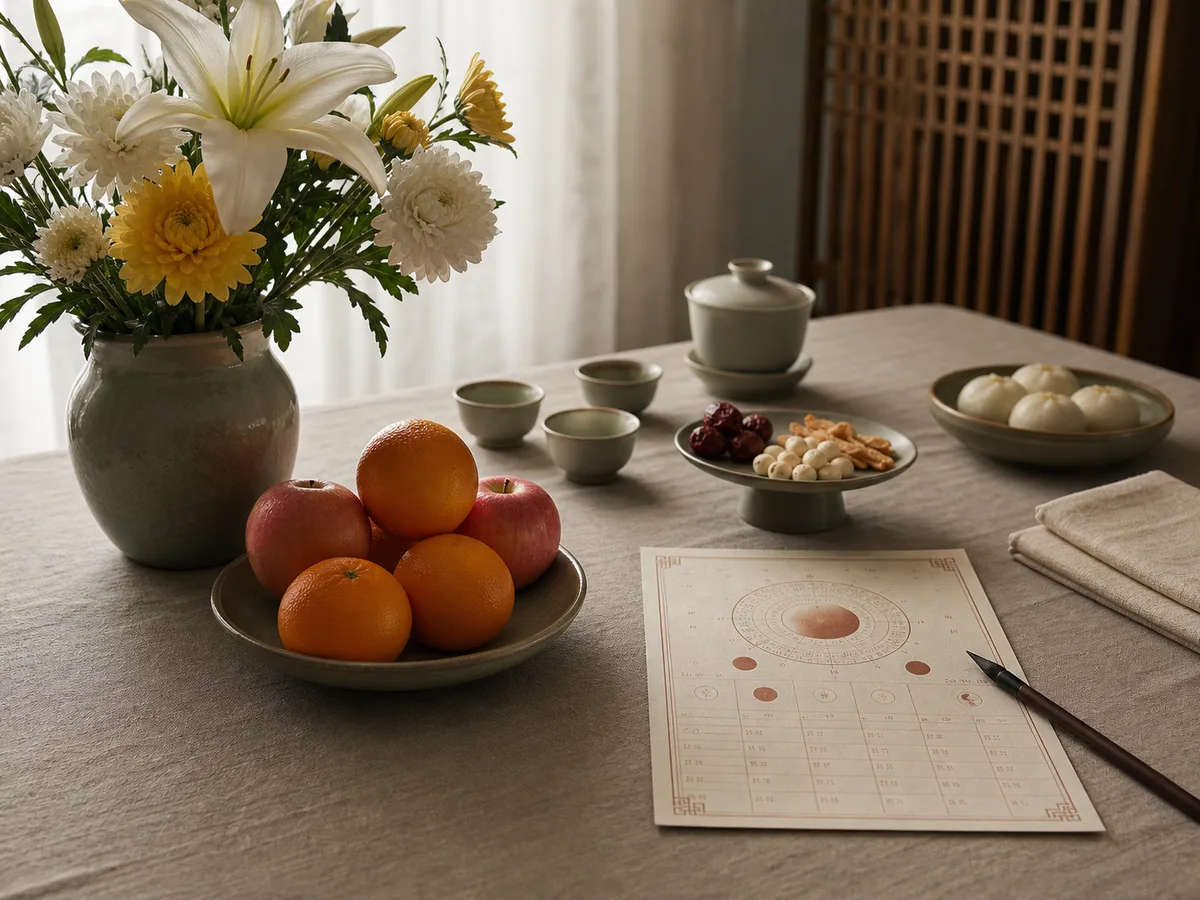
Ancestor rites are personal, lineage-based, and site-specific. The correct date may be set by family elders, cemetery appointment systems, columbarium rules, or a death anniversary. Respect privacy and avoid photographing names or tablets without permission.
Suitable activities
- Tomb-sweeping
- Columbarium visit
- Home altar offerings
- Death anniversary remembrance
- Family meal of remembrance
Avoid or handle carefully
- Stepping over offerings
- Taking intrusive photos
- Burning where prohibited
- Turning remembrance into spectacle
Practical planning
Date-selection checklist
- Follow family anniversary dates first.
- Use Qing Ming and Chong Yang windows where family custom supports them.
- Check cemetery, columbarium, and temple rules before bringing paper offerings.
- Plan elder comfort, transport, shade, and accessibility.
Animal signs
Zodiac clash notes
Families may care less about generic clashes and more about lineage obligations, mourning status, and whether key descendants can attend respectfully.
Timing
Lunar-calendar context
Qing Ming follows a solar term, while many ancestor birthdays, death anniversaries, and seasonal rites follow lunar or family records.
Read 2026 lunar calendar notesLocal practice
Regional and diaspora variations
- Families in Hong Kong, Taiwan, Macau, Mainland China, Southeast Asia, North America, Europe, Australia, and Latin America may follow different almanacs, dialect customs, temple calendars, and elder advice.
- Some households prioritize zodiac clashes and lunar day officers, while others prioritize practical constraints such as venue availability, work leave, school schedules, cemetery rules, or local fire regulations.
- Diaspora communities often combine ancestral custom with local laws, apartment rules, public-health requirements, and the calendar used by the country where the event happens.
- Diaspora families may observe at home when graves are overseas.
- Some cemeteries require booking and restrict burning or food offerings.
- Buddhist and Taoist memorial services may use different dates and ritual specialists.
FAQ
Frequently asked questions
Can ancestral worship be done outside Qing Ming?
Yes. Families also observe death anniversaries, Lunar New Year, Chong Yang, and household remembrance days.
What if we cannot visit the grave?
Many diaspora families remember ancestors at home, in a temple, or through a family meal when travel is not possible.
Limits
Important disclaimer
Auspicious-date guidance on Bai Bai is cultural and religious reference information for Chinese diaspora communities. It is not guaranteed fortune-telling, professional feng shui, medical advice, legal advice, financial advice, or a substitute for family elders, temple staff, qualified practitioners, or regulated professionals.